Nursery Cabinet Painting Ideas in Denver Metro, CO
You may have a cabinet in your nursery, and if this is the case you might well want to replace it entirely if it starts looking less than fantastic – but you don’t have to replace your cabinets when you can paint them instead and have them looking possibly better than new.
However, it’s worth knowing that in the pursuit of well painted nursery cabinets, there are some things that you can bear in mind that will help you along the way to get yourself to a place of having nice looking nursery cabinets.
Here are some nursery cabinet painting ideas in Denver metro, CO
1. Using Paint Friendly To Children
You may be wondering what could possibly be meant by the term friendly, in that it’s not like the paint itself is capable of being friendly or unfriendly – but rather, this is a reference to the kinds of chemical compounds that can be found in the paint itself.
Even when you make sure that you have properly ventilated the room being painted, when you make use of paints that contain volatile organic compounds, you will continue to see elements lingering around for a long time after the painting process has finished.
Better to make use of paints that do not contain any such compounds and avoid that kind of situation entirely.
2. Look At Colors To Use
There are going to be quite a number of colors that you’ll be able to use when you’re looking to paint your nursery but bear in mind that the primary resident of the room (being a baby) will not truly be able to appreciate the color or colors that you apply to the cabinets
That being the case, it’s well worth thinking about the color or colors that you might find to be the most appealing – you can save the discussion of what the child is going to prefer as far as the cabinet goes for when they are going to be old enough to actually make their opinion on the matter known — and you will know when that time comes.
Until that time, you can more or less be satisfied having the color or colors of your choice.
3. Paint Over A Tarp
Though you may well believe that you are going to be able to paint without making any sort of a mess, the reality is that any application of paint on a surface is going to raise the possibility that paint is going to drip.
The time that you might spend in preparing to paint a set of nursery cabinets in making sure that paint does not get on the floor does not compare to the time that you would likely have to spend trying to remove paint from the floor should it get there.
Paint can be so very tricky to remove, even when it is some of the more friendly to children paint, and so you are going to want to protect the ares not being painted before you start to paint.
4. Consider New Hardware
When you are looking to paint your nursery cabinets, you will of course have to remove the hardware to make it easier to get to the various parts of the cabinet doors and drawers.
Since you will already have the hardware off of the cabinets, you may as well think about the possibility of getting new hardware – there are plenty of kinds of hardware that you can get for your nursery cabinets, and it’s possible that replacement hardware that you get for the cabinets could be even better for them than what you had on them before.
Think about the overall theme of the cabinets and perhaps go for something that aligns better with them.
Don’t settle for just any painter when you can get the attention to detail and professionalism from Imhoff Fine Residential Painting in Denver Metro, CO. Call us today to speak with one of our professional color consultants.
In looking at the overall condition of your home, you may come to eventually realize that just as you can have a better looking house when you paint either the exterior or the interior, you can focus on certain parts of your exterior to improve upon their look.
Some people, for example, will have a look at a well constructed wooden porch and say that it looks the best exactly the way that it is, but maybe just stained a bit to protect it and to enhance the natural beauty of the material.
Others will opt to paint the porch and will want to use a color that is distinct from the exterior of the house – perhaps one that is going to complement or even contrast with the color or colors that you find on the exterior of the house.
When you want to paint your porch it’s useful to do so in a constructive manner and to take advantage of the information that you can gather regarding how to do it best.
Let’s take a look at some porch painting tips in Denver Metro, CO
1. Check the Weather
Since you’re going to be painting outside, you’re going to want to have a good look at the weather and make sure that the weather is right for such a paint project.
For example, you are not going to want to paint outside when the weather is too cold or too hot, but rather a more moderate temperature so that
It’s also important that you don’t think about painting if it’s raining or snowing outside – though of course, the snow will be immediately understandable due to the temperature, you won’t want to paint when it’s raining because the paint will be quite sensitive to a moist surface.
2. Use The Right Kind Of Paint
You’re likely to already know this, but there are quite a lot of paints that you’re going to be able to use when you’re painting your porch, but only a few of them are going to be actually proper.
You’ll need to start with making sure that the paint that you use is meant for being used for the exterior of your home, but also ideally that you will make use of a paint that is right for the sort of material that makes up your porch.
You’ll also want to take into consideration the kind of weather that you’ll expect to see in your area and base your paint choice on this – there are paints that are better for resisting moisture, for example.
3. Sand Before You Paint
You may not realize it but part of the painting process is ensuring that the surface that you are painting is as smooth as possible.
One thing that you will be able to do to get a smoother porch to paint is to sand, and this will involve getting either an electric or manual sander and sanding the surface that is going to be painted gently until you achieve a smooth surface.
Once you have finished sanding, you will want to remove the sanding dust from the porch that comes about from the sanding process as it isn’t something you want to get in your paint and get it dirty.
4. Allow Time To Dry
In painting your porch there will be a few steps wherein you will get the surface moist, so to speak – like when you clean the porch and it is slightly moist after you have washed it.
You need to wait after each of these steps before you move on to the next step because there are few things that ruin a paint job quite like having a moist surface.
Don’t settle for just any painter when you can get the attention to detail and professionalism from Imhoff Fine Residential Painting in Denver Metro, CO. Call us today to speak with one of our professional color consultants.
Painting Kitchen Prep To Consider in Denver Metro, CO.
You should be well aware of the importance of keeping up the appearance of your kitchen — and a lot of this will come down to how the walls look, in terms of how well they have been painted.
The good thing to know is that once your walls have been properly painted, it’s not something you have to put much thought into for a while — a good painting will last you a number of years and until that point, you can enjoy the work that went into getting your kitchen walls painted.
The thing that you should know about painting your kitchen is that when you are getting ready to paint, there are some prep steps that you should think about incorporating that when you do them well will extend the life of your painting project.
Let’s have a look at some painting kitchen prep that you might want to consider in Denver Metro, CO.
1. Removing Furniture
One thing that people will often overlook when they’re thinking about how to best paint their kitchen is the act of fully removing or at least partially removing the furniture from the room.
There are many benefits to removing furniture from the room in which you are going to be painting, chiefly being that you are not going to have the furniture in the way which will help to make for a faster painting process, and you are eliminating entirely the possibility that you will get paint on your furniture.
2. Clean The Surfaces
The kitchen walls that you are going to be painting will need to be thoroughly cleaned before you start — and there are two levels of cleaning that you’re going to have to do here is that it’s your kitchen.
One is your basic removal of dust and the like from the surface, which should be pretty much your first step when you’re looking to get any surface ready for a good painting.
However, when you’re working in the kitchen you also have to be mindful of the fact that a whole lot of cooking might be going on in there, and as such you might be dealing with some grease on the surfaces (especially those close to where the stovetop is) and that needs another kind of cleaning — and once you have finished cleaning off the grease, you will, of course, need to allow time for the surfaces to fully dry.
3. Pick Out A Good Color (Or Colors)
An often neglected step in preparing to paint your kitchen is having available the color or colors that you’re going to be using for painting.
Though many might imagine that all you’re going to have to do is to head into a paint store and pick a color or colors based on paint strips and how good they look, the truth is that you ultimately bring home a few small samples of paint to paint little areas of space in the room to see how the colors are going to look in different lighting conditions.
Only then are you going to really know what the best color or colors will be for your kitchen — and who knows if you may change your mind about what is going to look best ten years down the road?
4. Be Prepared To Prime
Lastly, you need to be prepared to prime the surfaces that are going to be painted and the reasons for this are simple – one being that you will want the surfaces being painted to be as smooth as possible, and applying primer is going to help you with that endeavor.
The second reason that it’s good to prime before you paint is that applying a good coat of primer before you paint will get you a surface that is more adhesive than one that lacks the primer.
Don’t settle for just any painter when you can get the attention to detail and professionalism from Imhoff Fine Residential Painting in Denver Metro, CO. Call us today to speak with one of our professional color consultants.
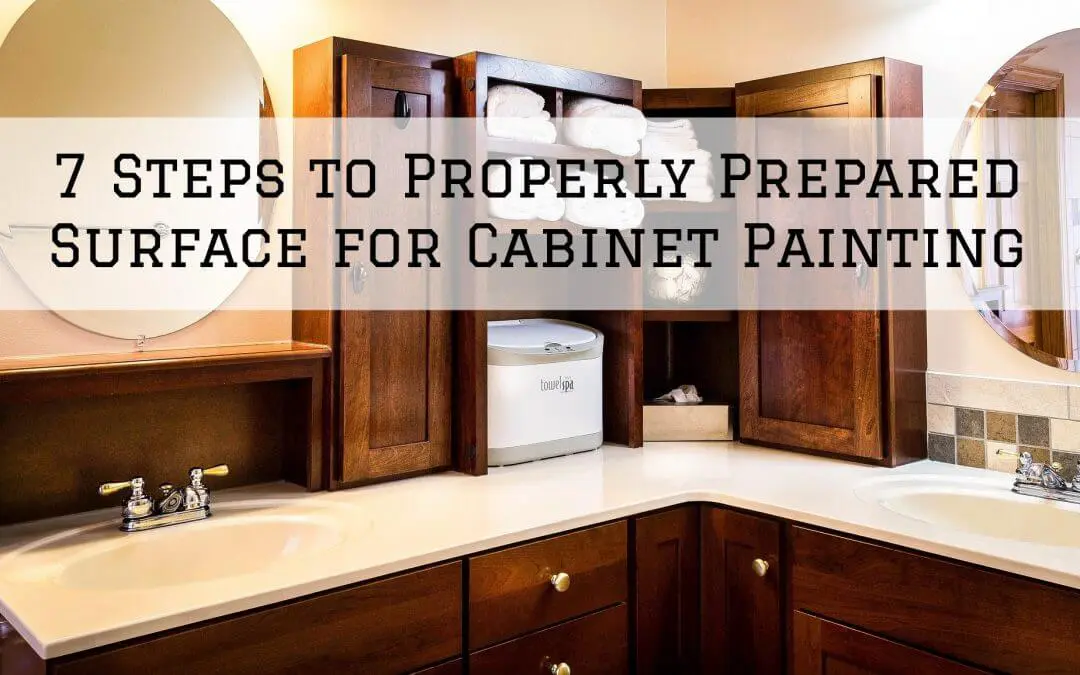
7 Steps to Properly Prepared Surface for Cabinet Painting in Denver Metro, CO.
When you’re looking to improve the look of your cabinets, you should be well aware that there are a number of steps that you’re going to have to take – and that’s even before you get to start applying the paint to the surface of the cabinets.
Indeed, if you want to have well-painted cabinets you have to make sure that you prepare the surface first, and with that in mind, we are going to show you the steps you will need to take to make it happen.
Let’s have a look at seven steps to properly prepared surfaces for cabinet painting in Denver Metro, CO.
1. Remove Hardware
The first thing that you’re going to need to do in order to get your surfaces properly prepared is to remove all of the hardware that is typically associated with cabinets.
Though of course, some would say you can just work your way around the hardware, it’s quite a lot easier to remove the hardware and then put it back – and you might even think of replacing the hardware with different-looking hardware while you’re at it!
2. Take Doors And Drawers Off Cabinets
The importance of removing the doors and drawers off of your cabinets cannot be understated as it helps you with surface preparation in a couple of ways.
One is that having these on will get in the way of painting – and so having them off helps you get the job done better.
Another is that it’s a lot easier to prepare to paint (and also easier to paint) these elements when they’re removed from the cabinets.
3. Degrease And Clean
A well-painted set of cabinets is one that has been cleaned first, and depending on what room you are in when you are making this happen there might be a bit of degreaser involved as well.
In any case, you want to make sure that you get all of the dirt and grime off of your cabinets as it will not do you any good to have it there – it will only make the final paintwork look unpleasant.
4. Check And Correct Surface Problems
One area that people will often neglect when they’re painting their cabinets in terms of preparation is checking to see if there are any surface issues that need to be corrected.
These can range from holes that need to be filled to cracks that need to be properly addressed — in any case, you need to make sure you look over the surface so that you don’t miss these.
5. Sand The Surface
The sanding of the surface of your cabinets is going to be the next important step, during which you will take your nice cabinets and get the surface that will be painted and get them to be more smooth.
Doing this will help get on the paint more easily and to some extent allow it to stay on better.
6. Clean Well
Once you have sanded the surface of your cabinets, you’re going to have to make sure that you properly clean it, because the sanding process is going to create quite a bit of sanding dust — and if you don’t remove it you will almost surely see it in the paint later on.
After you clean, be sure to allow time for the surfaces to fully dry and you will be on to the last step.
7. Apply Primer
The last step in preparing the surfaces of your cabinets is going to be applying a coat of primer and then allowing that primer to fully dry.
Doing this will get your cabinet surfaces as smooth as possible and also allow for the paint that you will then apply to your cabinets to adhere to the surfaces best.
Don’t settle for just any painter when you can get the attention to detail and professionalism from Imhoff Fine Residential Painting in Denver Metro, CO. Call us today to speak with one of our professional color consultants.
When Paint-and-Primer-in-One is Suitable and When It Should Be Avoided in Denver Metro, CO
When you spend a good amount of time in the world of home painting you may think about how sometimes lengthy the process of painting can be, and one of the things that contribute to this process is the use of a primer.
This is because the step of putting on that coat of primer can be quite time-consuming – both in terms of the fact that you have to apply the coat to the surface being painted as well as the fact that you then have to wait for the primer coat to dry.
As it turns out, there are some circumstances in which you can entirely avoid the primer coat if you invest in what is known as a paint-and-primer-in-one – but in some cases, you should not use this kind of two in one primer and paint and you have to go with the tried and true separate products in order to get a better paint job.
Here are some examples of when paint-and-primer-in-one is suitable and when it should be avoided in Denver Metro, CO
Avoid: When Painting The Exterior Of Your Home
One fairly clearcut area where you are going to want to make sure to use primer separate from your paint is when you are painting the exterior of your home.
Self-coating primer is significantly more expensive than buying paint and primer separately, but when you’re painting an interior room this may not make that big of a difference in the final cost of buying supplies for your painting project.
Exterior painting, however, requires many more gallons of paint and as such you could be looking at a cost that is several hundred dollars more if you go with paint-and-primer-in-one.
Suitable: When You Are Painting A Similar Interior Color
When you’re looking to paint the interior of your home and you have a room that is one color and the color you’re going to eventually change it to is basically the same (such as when you just are refreshing the paint job) or close enough in shade, you are going to be okay to use paint-and-primer-in-one.
This is because you will be able to make use of the product to cover what you have there (after you’ve made the time to properly clean and perhaps consider a gentle sanding to get the surface smoother of course) and since the color is going to be so similar, a paint-and-primer-in one is perfectly suitable for such use.
Avoid: When Painting Drywall And Masonry
When you’re thinking about painting surfaces such as drywall and masonry, this is exactly when you’re going to want to avoid making use of a paint-and-primer-in-one product and go directly for using primer and paint separately.
Drywall and masonry and other surfaces like them are quite porous, and when you will be painting porous surfaces, you shouldn’t use the all-in-one product but rather make use of primer so that the surface is properly sealed.
Suitable: When Painting A Darker Color
Lastly, remember that when the color you are going to be applying to your interior walls is going to be darker than the color or colors that are already on your walls, you’re going to be basically pretty much safe making use of a paint-and-primer-in-one.
The reason that this is the case is that in painting a darker color over a lighter color, you’re going to be basically taken care of as it were with the primer that had been previously applied to the surface of the walls, and you won’t have to worry about the old color coming through since lighter colors won’t show up through darker colors.
Don’t settle for just any painter when you can get the attention to detail and professionalism from Imhoff Fine Residential Painting in Denver Metro, CO. Call us today to speak with one of our professional color consultants.