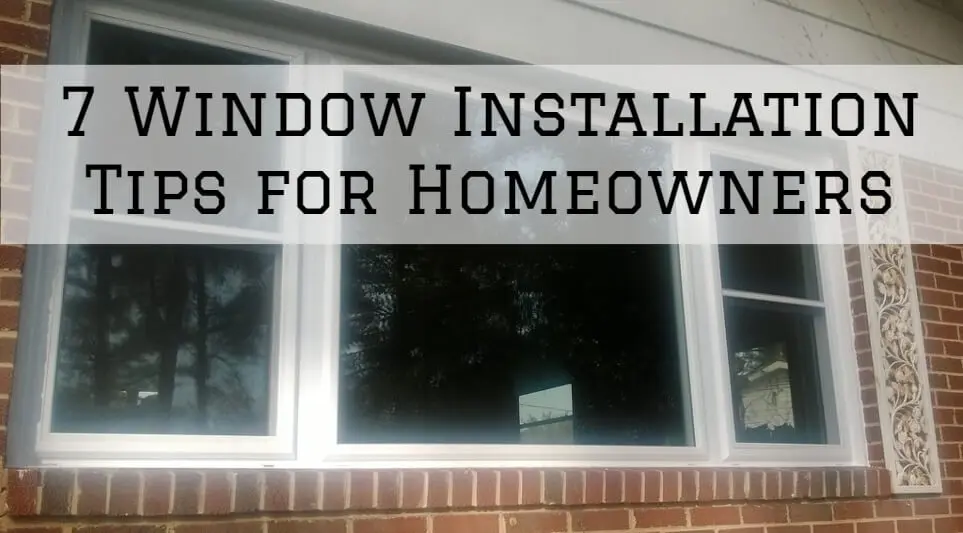
7 Window Installation Tips for Homeowners in Denver Metro, CO.
When moving into a new home, it is normal to have things you want to change in order to suit your personality — or if you’ve lived in your home long enough and either want a new look or need to replace outdated windows.
While it may seem like window installation is fairly straightforward, you want to be sure it is done right to avoid a costly fix on recent work especially since windows generally require that you make new cuts into the existing siding.
Don’t worry because we have seven window installation tips for homeowners in Denver Metro, CO.
1. Take it a Couple Windows at a Time
There are a few things more nerve-wracking for a homeowner like having open points of entry into your home — whether for weather or intruders.
Taking out and immediately replacing only a couple of windows in one move gives you time to get the new windows in and fully functioning before the day turns dark and you do not have to spend the night worrying about whatever has access to your home.
2. Consider Your Style Options
Windows don’t just come in a variety of shapes but also materials and finishes, giving you a wide array of options when selecting a new piece.
Take a look around your home and try to match the existing hardware inside in order to help the windows blend seamlessly into your design scheme — this makes a difference when deciding whether or not to have gridding in your panels as well.
For example, a classic colonial style with a four-grid pane might take a modern home back in time in terms of style and the windows might stick out like a sore thumb.
3. Choose Your Glass Type
Thankfully, leaded glass is a thing of the past and the worry that there will be sickness from a cut on a broken window isn’t valid anymore but that doesn’t mean there is only one type of glass that has replaced them.
If you are looking for something a little flashy, you can opt for tinted or textured glass for your accent windows.
Or, if you have children or live in a neighborhood with many kids, opting for laminated glass panels prevents the shattered glass from falling into your home after an accident — or if there is an attempted break-in.
4. Shoot for Maximum Efficiency
In addition to choosing glass types based on their look, there are also different options that cut down on energy costs and help to maintain your home’s climate.
If you want to research which glass is right for you, be sure to check the Energy Star lists before purchasing.
5. Select the Function that Suits Your Needs
I’m sure there are folks who love the idea of getting on a tall, rickety ladder to clean their upper-story windows when the weather is nice… right?
For the rest of us, you can choose windows that tilt inside when opened to easily clean them from the safety of your room.
These windows are also easier to open for folks with physical limitations.
6. Be Sure to Replace the Frames
Drafts coming in around older windows aren’t always caused solely by the seams around the windows but could also be the result of the damage brought on by rot or pests.
Installing new windows without checking the existing frames first might not solve the issue and you would need to do the work over again in order to find the reason for the draft that failed to get fixed the first time around.
7. Always Check for Warranties
Finally, never sell yourself short by failing to look for warranties on your home improvement materials, windows included.
There are many accidents and factory issues that can cause a window to become useless before you are ready to replace it and a warranty may cover the cost of installing new windows without coming out of pocket.
Don’t settle for just any painter when you can get the attention to detail and professionalism from Imhoff Fine Residential Painting in Denver Metro, CO. Call us today to speak with one of our professional color consultants.
7 Ways to Make Your Landscaping Pop in Denver Metro, CO.
As we start thinking about what to do with our lawns when spring softens the ground again, we run into unlimited ideas and potential which can become easily overwhelming.
Should you plant more flowers, stick to a design, let things grow wild or just give the job to someone else to make these decisions for you?
Regardless of your choice, there will be work to do when the weather warms up and we are here to help you narrow down your selections.
Let’s get into it with these seven ways to make your landscaping pop in Denver Metro, CO.
1. Go for multiple levels
While terracing is often done to tame a steep hill for better landscaping use, you can also use man-built terraces to add depth to a flat yard.
Either way your lawn goes, these levels can be used to offer a different beauty in each section from flowers to shrubbery to a line of border trees — you can create an eye-catching ombre effect this way by having a variation of one color in each tier from light to dark.
A great benefit of this method is that the separation can keep kiddos from trudging in your flower beds and planting a border of arborvitae for example can add a second level of privacy to your property line.
2. Let it go… wild
Rather than planting an open space of grass, you can opt for a micro clover lawn (low maintenance, high sustainability) filled with wildflowers, shrubbery and trees that don’t follow any design.
This idea is great when you are looking for something beautiful and easy as a clover lawn requires little to no mowing and wildflowers are easy to seed and often require little in the way of hands-on maintaining.
This type of landscaping returns nutrients to the soil and helps to purify the air more than your traditional grass lawn.
3. Put your high school geometry to use
For a more modern approach, you can set up your garden or flower beds, patios/decks and any walkways with a geometric design that pulls focus to the landscaping.
You can put splashes of color in strategic locations and achieve the type of yard you see on the cover of magazines.
This idea does well with the modern style as it has cleaner lines and works well with a minimalist approach.
4. Add a little fire
Almost every culture has stories that began around a campfire or bonfire, and you can bring this tradition to your own yard with a built-in fire pit.
You can choose to build a pit yourself or buy a kit that makes your pit portable and leaves room for adapting to any redesign — in fact, you could update your setup every year and the fire pit can move along with those plans.
Adding some seating around the fire gives you the opportunity to entertain guests and spin yarns of your own.
5. Bring the kids to the yard
While a lot of yards with toys for children tend to look unorganized (although they are well-maintained), you can work the kids’ options into your landscaping design as pieces of interest.
Pathways laid to bring you to a treehouse or swing set area that are built to match your design style show your neighbors that you care about property values as much as your children’s opportunity to have fun outside.
This also makes it easier to adapt these areas back into the landscaping once your children have outgrown their toys.
6. Embrace the whimsy
There are lovely touches to any yard that add a bit of magic to your space — fairy houses, labyrinths and yard art are all popular ways to showcase your personality while creating a beautiful landscape.
You can hang colored bottles and spheres of glass from tree branches to catch the sun and throw their colors to the area around them while adding a relaxing tone when a breeze kicks up.
Lawn gnomes can be traditional or contemporary with differing styles and either make folks smile or laugh when they see the setup created in your yard.
7. Plant edible options
Finally, consider setting aside some of your yard for edible gardening with raised beds that remain stylish while also being functional.
Growing your own food with crop rotation is good for your soil and can add to your property value over time to replace nutrients and allow for better growth patterns in future decorative plants.
Beyond what it can do for your land, you give yourself the feeling of accomplishment that comes with growing your own food and a drop in cost for fruits and vegetables.
Don’t settle for just any painter when you can get the attention to detail and professionalism from Imhoff Fine Residential Painting in Denver Metro, CO. Call us today to speak with one of our professional color consultants.
5 Uses for a Finished Basement in Denver Metro, CO.
Having extra space in your home that can be used in a variety of ways is both a blessing and a challenge to figure out how you want to use it — without it becoming the place where things go to be forgotten.
Whether you want to use it for a family area or individual space can be dependent on the size and accessibility of your basement — imagine moving larger furniture down a narrow staircase, for example.
The number of windows may also weigh on your decision over which option to choose for your space as there are benefits to the amount of natural light or lack thereof.
Looking at these issues, we can suggest five uses for a finished basement in Denver Metro, CO.
1. Put in a home gym
Paying for a membership to work out in public can sometimes be the deciding factor between getting fit or giving in and even an avid fitness enthusiast might still be left without options if a gym is neither nearby or affordable.
Having your own workout equipment is great not only to save money on a membership but also to ensure that the equipment itself is running properly for a much longer span of time as you aren’t sharing it with various other people.
With a gym in your basement, you can personalize the space to have only the machines you will use and add an open spot for doing yoga, pilates or other cardio workouts — even the paint colors and colors of your various gear can be personalized for either a relaxing or invigorating workout.
2. Have your own movie theater
After the price of tickets and concessions, going to the theater can become a luxury that isn’t enjoyed as often as one might like — especially in the middle of a pandemic when you could easily spend a little less to stream the same movies at home.
Using your finished basement as a home theater saves money, adds a higher level of comfort and is incredibly customizable — imagine getting a theater experience for movies that were released before you were born or a cult classic that never made it to the box office.
Rather than shifting your weight in the folding seats at the local cinema, you can kick back in a cushy recliner with your favorite snacks on hand to enjoy whichever title you choose.
The best thing about this option is that it thrives on a lack of natural light, so basements with little to offer by way of windows can become an amazing home experience.
3. Play in a game room
Also beneficial for basements without an abundance of natural light are game rooms — either for tabletop gaming or video gaming.
Basements are often quiet spaces without the risk of sound bleeding through the walls into other rooms and using yours for a game room where the players might get rambunctious or games like pool might get a little loud with the clicking of balls against one another and into pockets keeps the main floor of your house a relaxing area.
You can add a wet bar in your game room to keep drinks and snacks on hand and give guests the feeling that they walked into a tiny Dave and Busters or similar — but without having to buy credits for playing!
Putting these basement qualities together makes it the perfect space for watching your favorite spectator sports as you avoid the glare from many windows and your enthusiasm won’t cause your partner or neighbor to complain.
4. Lower the master bedroom
Opting to put your master bedroom in the basement adds a whole new level of privacy to your home retreat — this is even better in a daylight basement with plenty of natural light and the option to walk out onto a private patio.
Another benefit of choosing the basement for your boudoir space is the cool of the room during warm months as basements run colder than the floors above ground and cooler temperatures are generally preferred when people are sleeping.
Less windows are beneficial for those who prefer sleeping in absolute darkness and the quieter atmosphere deepens the sense of relaxation.
5. Set up rental space
If you don’t need the space for yourself or want to cut down on the monthly cost of your mortgage, using your basement as a studio or one bedroom apartment (depending on your space) fills the emptiness — and your wallet!
All the benefits of having your master bedroom in the basement are the same with an income property with the ability to close off the connecting door and give your tenant their own entrance.
You can also use this as a mother-in-law apartment for older parents who would benefit from living with your family rather than by themselves — the ability to help out your family is priceless, and a finished basement can give you just that.
Don’t settle for just any painter when you can get the attention to detail and professionalism from Imhoff Fine Residential Painting in Denver Metro, CO. Call us today to speak with one of our professional color consultants.
5 Tips For Painting Your Laundry Room in Denver Metro, CO
There are few places that are quite like your laundry room — it’s a place where you will find yourself going mostly when you have one of a few needs – one being the need to do the laundry, and the other basically being the need to replenish the supplies related to doing your laundry.
It’s not like people normally will go to their laundry room to do other things – and yet you should know that even your laundry room should have well-painted walls, meaning that on occasion it will be a good idea to repaint them to get them looking nice again.
Alternatively, when you’re setting up your laundry room for the first time you should think about giving it a good paint job.
With that being the case, let’s now look at and consider five tips for painting your laundry room in Denver Metro, CO
1. Flat Paint May Be Okay
Though there are plenty of rooms in which you are more likely to want to avoid making use of flat paint, the laundry room is not one such room.
The reason that flat paint can be okay in a laundry room is directly related to the low amount of traffic that your laundry room gets (vis-a-vis how infrequently it is used) coupled with the fact that you just go in there to get clean laundry or to deposit dirty laundry… but the laundry isn’t likely to hit the wall at any point.
As such, your walls aren’t going to get regularly dirty to the point that you would want to clean them as you would if you were looking at painting your dining room, for example.
2. Try To Move Machines Well Away
In the process of painting your laundry room, you are going to want to have a good amount of free space in front of the wall such that it will be more simple to paint it well.
The washing machine and the dryer are the two big candidates for things to move away from the wall during the painting process, as they are more normally found quite close to the wall which is good during operation but not good at all when you are trying to paint the walls.
Of course, removing everything from the room would be ideal but this is not always so feasible especially given how heavy the machines are.
3. Plan Out Your Painting Project
For the purpose of getting your laundry room painted well, you should make sure that you have first planned out your project before you start out on it.
This is because you have to purchase supplies and paint and primer and other consumables and so you will be better off having a good plan to paint including how much paint you’re going to need and how much primer and the like.
By having a plan you’ll also know when to paint and when to rest, which is particularly helpful since there will be times you need to let surfaces dry.
4. Clean Before You Paint
If you want to properly paint your laundry room, it’s imperative that you first clean the walls that are going to be painted as well as the area near where you are going to be doing your painting.
The former is a bit more easily understood, but the latter is also important as you don’t want things getting in your way while you paint and you also aren’t going to want to possibly get dust or dirt from the floor onto your painted surfaces.
5. Wear Protective Equipment
Lastly, you should remember that you have to protect yourself from the various elements of the painting process that could well be harmful – those being the dust that can come about as you prepare to paint as well as the paint itself.
Remember to wear a protective mask so you don’t breathe in the dust while you prepare and protective goggles – easier to clean goggles than to do something about paint by your eyes!
Don’t settle for just any painter when you can get the attention to detail and professionalism from Imhoff Fine Residential Painting in Denver Metro, CO. Call us today to speak with one of our professional color consultants.
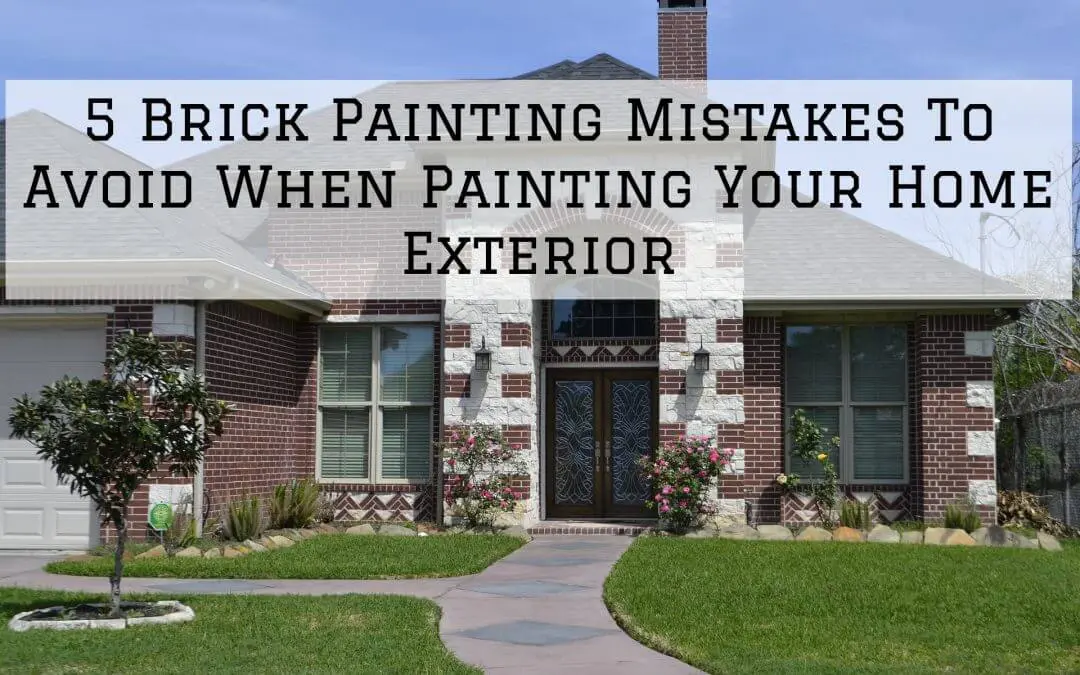
5 Brick Painting Mistakes To Avoid When Painting Your Home Exterior in Denver Metro, CO
In painting the exterior of your home, it’s entirely possible that you’re going to notice that there is quite a bit of a difference between how things are when you are painting a home with a brick exterior versus painting the exterior when it is made of other materials.
It’s important to note that if you make certain painting mistakes in painting your brick exterior, you are very likely to suffer as a result and may ultimately cost you a lot to repair both in terms of time and money.
However, by avoiding these mistakes you can be sure that you’re not going to have at least some of these issues down the line.
Let’s look at five brick painting mistakes to avoid when painting your home exterior in Denver Metro, CO
1. Not Removing Mold First
One big mistake that people tend to make when they are looking to paint the brick exterior of their home is to not make the effort and time to remove the mold that may be sitting there on the surface.
Though some would have you believe that there is nothing wrong with leaving the mold on and that having even just a touch of mold on there is no big deal since you’re going to be painting anyhow, this is definitely not the case and you should be aware that all you’re really doing by this is setting yourself up for a long term failure on the exterior of your home.
Make the time to remove that mold and you will find that the paint job ultimately will look significantly better as a result.
2. Not Cleaning The Area At All
Next up in the perilous mistakes that a person might make while looking to paint their brick home exterior is that of not even trying to clean the area around where they are going to be painting.
The thing about home exteriors that needs to be understood is that whatever is in the area when you are trying to paint has a good chance of making its way onto your home exterior, depending on how well the grounds are protected, so to speak.
By cleaning the area, you are going to be doing right by your painting work in that you won’t have as much of a chance of having these things end up on the surface of your paint work.
3. Skipping The Primer Coat
In preparing to paint your home exterior, you should know that there’s a rather key part of getting the surface of your brick exterior ready to be painted and that is applying a coat of primer.
Making use of a coat of primer is a good way to ensure that your home’s exterior surface is more smooth and has the proper adhesion for the subsequent coats of paint.
4. Not Allowing Coats To Dry
In the world of painting your home exterior, there are as you may know more than one coat of paint and at least one coat of primer that will be applied to the surface.
If you want to make sure that things go well with your painting project, you have to make sure that you allow each coat to fully dry before you move on to the next step in the process.
5. Using The Wrong Kind Of Paint
Lastly, one of the biggest mistakes that people will sometimes find themselves making is just using the absolutely wrong kind of painting for painting their brick exterior.
There are so many kinds of paint that you can use for a brick exterior but there are also paints you should not be using – avoid using these paints (that are not meant for brick) if you want the paintwork to go well.
Don’t settle for just any painter when you can get the attention to detail and professionalism from Imhoff Fine Residential Painting in Denver Metro, CO. Call us today to speak with one of our professional color consultants.