In remodeling your home, you may well know that the act of painting the walls transforms the space quite radically and that it can make a rather drab looking room a lot nicer.
Though this is well and good, the truth is that sometimes you just don’t have the time or energy to paint an entire room — but if you can paint one wall a different color and therefore differentiate it from the other walls, you will be creating an accent wall and this can also make a room look so much nicer.
Let’s now look at seven accent wall painting tips in Denver Metro, CO.
1. Cleaning Before Painting
It’s fundamentally important when you’re about to paint a wall that you should clean the wall before you paint it.
Moreover, you’re going to want to paint the area surrounding the wall that you are going to paint — and then make sure to lay down a good drop cloth in the area near the wall being painted so that you don’t get paint drips on the floor. While plastic drop cloths can be cheaper and more affordable, canvas drop cloths can be washed and reused for multiple painting projects.
The reasons for this are many but you should certainly make an effort to clean and then to allow time for it to dry.
2. Using The Right Paint
There are so many paints from which you’re going to be able to choose when you’re painting your accent wall, but not all of them are going to be equally suitable.
Naturally, you are going to know not to use an exterior paint but are you aware of the different kinds of gloss that you can get with paint and what these different glosses mean in terms of use?
Glossier paint is easier to clean, for example, but not everyone likes the look of a glossy paint — so you really have to check out the balance of pros and cons based on what your needs are and what kind of traffic you can expect for the room.
3. Choosing The Best Colors
Since you’re going to be using this accent wall to be of a color that is not the same as the other walls, you should choose a color or colors that have some relation to the color or colors of the other walls.
This is to say, the two colors or color combinations should not clash but rather be a good contrast.
4. Sanding Before Painting
There are a few things that are key to doing well when you’re painting a surface, and one of them is to make sure that you have a smooth surface.
To do this, you’re going to want to take steps such as making good use of primer (more on this later) and also sanding the surface that is going to be painted.
The good thing about sanding is that it prepares the surface for the paintwork ahead — and you just have to remember to also clean the sanding dust off of the said surface.
5. Using Primer Properly
As mentioned above, it’s a good idea to properly apply primer to the surface that is going to be painted.
The reasons for this are many, but suffice it to say that paint adheres to a primed surface much better than an unprimed surface.
6. Two Colors Can Be Used
Though this will be an accent wall and as such you could come to think that you can only use one color, the truth is that you can use multiple colors.
There are numerous ways you can use more than one color, such as stripes and even other patterns — but it’s really all about how it looks nicest to you.
7. Let The Paint Dry
Lastly, make sure that you allow the paint to dry after you paint each coat — and to also allow time for your primer to dry.
One big mistake that people make is to paint soon after painting one coat, and this can end up in a messy disaster!
Don’t settle for just any painter when you can get the attention to detail and professionalism from Imhoff Fine Residential Painting in Denver Metro, CO. Call us today to speak with one of our professional color consultants.
FAQ
What is the best paint for interior walls?
Latex paint is best for most interior walls due to its durability and low VOCs. For high-moisture areas, acrylic paint is ideal as it resists mold and mildew.
How often should I paint my interior walls?
Repaint every 5–10 years, depending on traffic and wear. High-traffic areas like kitchens and hallways may need more frequent touch-ups.
Can you spray paint interior walls?
Yes, spray painting provides a smooth finish and is efficient for large areas. However, it requires proper prep, ventilation, and protection from overspray.
5 Mistakes To Avoid While Painting Kitchen Cabinets in Denver Metro, CO
When you are looking to repaint your kitchen cabinets, there are quite a number of things that can easily go wrong if you are not careful.
Some of these things are just accidents that cannot be easily avoided, but some of them are just done if you don’t know what you are doing or if you are not sufficiently knowledgeable in the area of kitchen cabinet repainting.
With that being the case, let us now look at and consider five mistakes to avoid while painting kitchen cabinets in Denver Metro, CO.
1. Not Allowing Enough Time For The Painting Project
On average, painting your kitchen cabinets can take anywhere from three to four days depending on how large they are, how many of them there are, and how many people are helping you with the operation.
What a lot of people don’t realize is how much time it really takes for paint to dry — sure, people do like to talk about the boring nature of watching it happen (as opposed to watching grass grow, for example) and it can be quite a while — and that’s not even to say the time that you actually have to spend preparing the area and then sanding, priming, and painting.
By realizing how much time it will take to fully cure, you will set aside the appropriate amount of time in advance and not ultimately waste more time
2. Not Sanding Before Painting
A big mistake that rookie painters make when they are painting just about anything in their home, whether on the exterior or interior, is to skip the sanding phase of the painting job.
The sanding of kitchen cabinets is a crucial step before applying a fresh coat of paint because it helps with getting the surface of the cabinets as smooth as possible.
Without the sanding, you will still have painted cabinets but they won’t be painted nearly as well, and the paint job will not last as long on your newly painted cabinets.
3. Choosing A Paint Color Based On How It Looks In The Store
There are many ways you can choose your paint color for your kitchen cabinets, but choosing it strictly based on how paint strips look in the store is definitely not the one that you should use — unless you are the gambling sort of person.
The reason this is the case is that while a paint strip might look fantastic in the store, the way that it will actually look in your home can be entirely different depending on your lighting conditions and the time of day.
Better to get a small paint sample and put it on in the kitchen and then to see how it responds to these various conditions — the small amount of money you spend on the sample is worth not getting the wrong color.
4. Not Removing The Cabinet Doors And Drawers Prior To Painting
When you leave the cabinet doors and drawers on while you are in the painting process, you are setting yourself up for a very difficult painting process, one that may take considerably longer than it should.
This is because leaving on the cabinet doors and drawers will keep them in your way as you are painting the rest of the cabinets and will overall make the painting process more difficult for the doors and drawers.
5. Not Planning The PaintWork Beforehand
Lastly, the biggest mistake that people make is to not plan their paintwork beforehand.
This includes things like not trying to figure out how much paint will be needed, what kinds of hardware, etc.
You can just imagine how difficult it would be to paint your cabinets if you underestimate the paint need and run out halfway through.
Don’t settle for just any painter when you can get the attention to detail and professionalism from Imhoff Fine Residential Painting in Denver Metro, CO. Call us today to speak with one of our professional color consultants.
FAQ
How much does it cost to paint kitchen cabinets?
The cost to paint kitchen cabinets can vary based on factors such as the size of the kitchen, the number of cabinets, and the complexity of the job. For a free estimate in the Denver Metro area you should give us a call today!
What is the best paint for kitchen cabinets?
We recommend using a glossy paint finish. Glossy finishes are durable, easy to clean, and well-suited for areas prone to dirt and grease, such as kitchens. They also reflect light, giving the room a brighter appearance. Glossy paints come in various levels of sheen, including full-gloss and semi-gloss, allowing you to choose based on your preference.
How to clean painted kitchen cabinets?
To clean painted kitchen cabinets, especially those with a glossy finish, use a cloth and some soapy water. This simple method effectively removes dirt and grime without damaging the paint. Regular cleaning helps maintain the appearance and longevity of the cabinet surfaces.
Painting Your Dining Room Cabinets – Tips in Denver Metro, CO.
When you’re looking to improve the look of your dining room, you may look to the cabinet doors that you have in there just helping you out with keeping your dining room accessories and the like neat and organized.
Of course, it’s worth noting that there are things that you can do to improve the painting process, such that you will ultimately have nicer-looking cabinets in perhaps less time.
Let’s now have a look at some tips for painting your dining room cabinets in Denver Metro, CO.
1. Be Careful With Color Choice
One important thing that you’re going to have to do when you’re looking to paint your dining room cabinets is to be particularly careful when you are choosing the color or colors that you will use for them.
This is because you might see a color in the paint store and think that it is going to be perfect for the cabinets but once you have finished the painting job and the paint has dried, you come to realize that it doesn’t look good at all next to some of the other furniture that you have in the room.
Really the best thing you can do is to get a couple of small samples of actual paint which you will use to apply just enough paint to see how it will look, and then once you have seen how it looks in different light conditions you will be able to then get the paint or paints for painting.
2. Remove Hardware
An important key to painting the doors properly is making sure that you fully remove all of the hardware that will be on the cabinets before you start painting.
This is the case because when you are looking to paint your cabinets, you are going to have either of two choices, both of which take a good amount of time.
One of them of course is to try to paint around the hardware — but this is easier said than done and you’re going to end up spending a lot of time either painting around the hardware or spending the time to first remove the hardware before you paint.
Though it would seem like both of these things are going to take up a good amount of time, removing the hardware is going to be a better choice as it will be a lot simpler to paint without the hardware there to get in your way.
3. Primer Before Paint
You will perhaps want to skip the priming part of the painting process but it’s important to apply a coat of primer to your dining room cabinets before you apply the first and subsequently the second coats of paint.
The reason that this is going to be a good idea is that you are going to want your paint to stay on the surface of the cabinets for a longer period of time, which will be more possible through using a primer first as it helps to get the surface to be more adhesive as it were and so paint won’t be peeling so readily as if you were to just paint the cabinets directly without primer.
It’s also useful to use primer because you will find that it will make the cabinets smoother, and through this, you will have an easier time painting your dining room cabinets.
4. Let Your Surfaces Dry
At just about every stage of your painting project, you will be doing things with your cabinets that will get the surface to be moist to some extent, and when you do this you will need to allow the surfaces the correct amount of drying time before you move on.
By doing this you will have a better painting project and not run into painting issues down the line.
Don’t settle for just any painter when you can get the attention to detail and professionalism from Imhoff Fine Residential Painting in Denver Metro, CO. Call us today to speak with one of our professional color consultants.
7 Budget Curb Appeal Ideas To Consider in Denver Metro, CO
The notion of improving your curb appeal may be well familiar to you, but one thing that not a lot of people take into consideration is the cost of the improvement — and that can be quite significant for some improvements.
This doesn’t always have to be the case, however — there are ways to get a better curb appeal without spending a lot of money in the pursuit of doing so.
With that being the case, let’s look at and consider seven budget curb appeal ideas to consider in Denver Metro, CO
1. Movable Potted Plants
One way that you can improve the curb appeal of your home without spending a lot of money is by getting movable potted plants.
There are numerous benefits to such plants, including the fact that you can reposition them to your liking and even change them entirely without having to put too much work into it as you would if they were rooted in the ground.
By having potted plants like this you can move around plants and make your home look that much nicer.
2. Creative Flag
Years ago if you wanted a flag that would hang outside of your home, you were pretty limited in your choice — you had the standard US flag and maybe the state flag… and not too many others.
This compared to how things are now — you can get a flag made with just about anything on it, and often enough for quite a low price.
If you love cats, for example, you’re likely to be able to find a nice flag with cats on it — and very possibly for a price point that will be good for you.
3. Clean Your Walkway
As unbelievable as it may seem, something as simple as cleaning your walkway can have a major transformative effect on your curb appeal.
This is because of how much you can change your walkway in appearance from when you start the cleaning process and when you finish.
Of course, you can add things to the walkway to improve it if you would like, and these things do not have to cost a lot of money in order to be aesthetically pleasing.
4. Paint Your Porch
If you have the time, you can do a lot for your curb appeal by painting your porch.
This is particularly the case if your porch is just large enough that painting it would enhance the look of it — but even if it is somewhat small, changing the color is sure to be a way to make it look nicer.
5. Trim Your Shrubs
A fairly simple thing that is going to boost your curb appeal and also be good for your house, in general, is to trim your shrubs.
The appearance of shrubs outside of your home that are growing all over the place is surely not the kind of image that you want to put into people’s minds as they are walking by your home.
By taking the time to trim your shrubs, you will make it clear that you care about the appearance of your home and you won’t spend a lot of money doing so.
6. Replace The Doormat
If you really want to make an impression on people, even those that are seeing your home from the curb, it’s good to have a nice looking doormat.
Though it may not seem to be the case, a worn out looking doormat can look really bad and will lower the value of your home in the eyes of the passerby.
7. Better House Number
Lastly, think about the one thing that identifies your home and sets it apart from the other houses on the street — it’s the house number.
The better the quality of the curb number, the more easily people will be able to find the house more easily and it will certainly look better.
FAQs
What are the benefits of using movable potted plants for curb appeal?
Movable potted plants allow you to easily rearrange or replace them to refresh your home’s look. They add color, texture, and personality without requiring permanent landscaping.
How often should I clean my walkway to maintain curb appeal?
You should clean your walkway seasonally or after heavy weather to remove dirt, debris, and stains. Regular maintenance ensures an inviting appearance year-round.
What types of materials are best for durable and attractive house numbers?
Materials like stainless steel, brass, aluminum, or weather-resistant acrylic are excellent choices. They withstand outdoor elements while adding a stylish look to your home’s exterior.
Don’t settle for just any painter when you can get the attention to detail and professionalism from Imhoff Fine Residential Painting in Denver Metro, CO. Call us today to speak with one of our professional color consultants.
Pattern Painting Techniques for an Upscale Look in Denver Metro, CO.
Have you ever felt the need to refresh your space and give it a boost in style yet couldn’t quite figure out what to change — the color on your walls was satisfying, but perhaps adding something to it would be enough?
Wallpaper can be a lovely addition, but it requires skill, precision, and the knowledge that it will eventually have to come down — and taking down wallpaper is a pain few homeowners have the desire to experience.
Rather than spending the time and money on wallpaper as a means of giving your walls a little pizzazz, consider using paint and a bit of artistry to create a new, patterned design.
This can be easier than you think, so let’s talk about some pattern painting techniques for an upscale look in Denver Metro, CO.
It’s All Geometric
One of the most popular pattern techniques is the straight-lined geometric design.
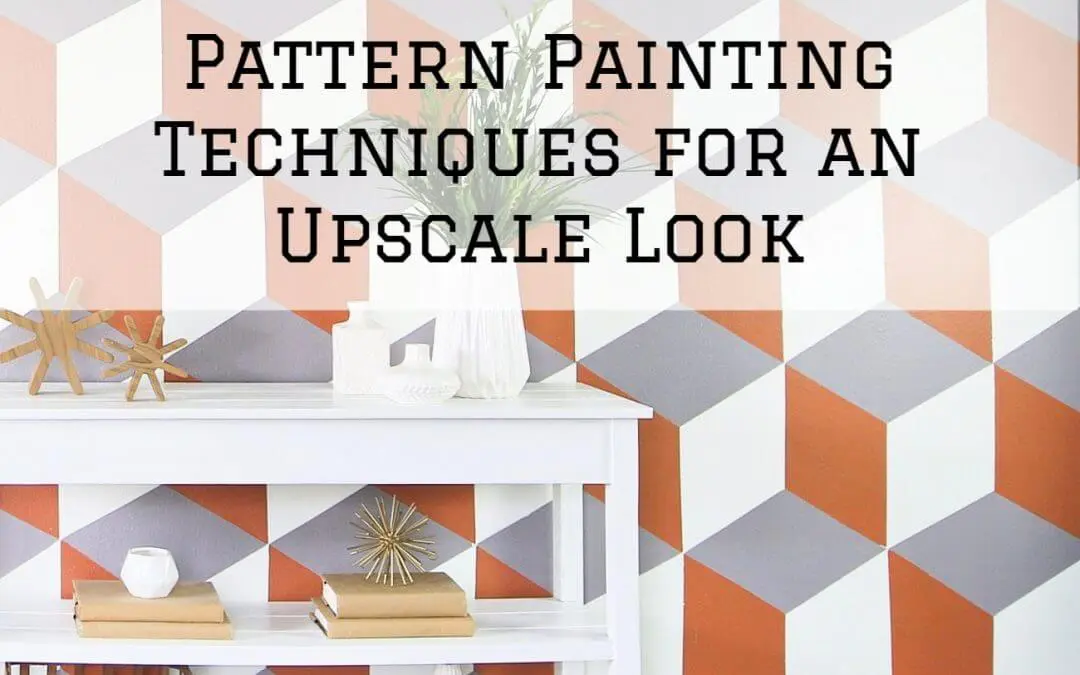
Looking at the photo included with this post, you see a pattern that can be achieved by taping off sections of the wall and alternating paint shades to create the desired effect — but you can apply this at home with whatever shape you prefer.
These types of patterns are not required to be all sharp edges like chevrons or diamonds but can also show off a softer side with polka dots or curvy lines — in fact, a wavy design in blue shades can really make a coastal theme pop.
Geometric designs are pleasing to the eye, stimulating for our minds, and a great way to express our creativity without having to worry much about the technical aspects of the job — not to say this is foolproof, but it is a very user-friendly method and one that has endless pattern possibilities.
Feel the Texture
Similar to how people that appreciate art will discuss the particular brush strokes and paint choices in their favorite pieces, texture can be used on your walls to add the missing element you’re looking for.
By using sponges, brushes, or mix-ins, you can alternate the textures you use in your painting from wall to wall or even within the same wall to create a dynamic effect.
An interesting technique is the French strié which uses brush strokes to create the illusion of linen fabric — something that would look especially great with a tapestry or linen art print.
When opting for texturization, always be sure that whatever medium you are mixing with your paint is something that a particular brand/finish can combine with — check the website of the manufacturer to get information on your products to ensure the best results.
Stencil It In
Maybe there is a pattern that you don’t feel comfortable shaping by hand or you’d like the process to go by faster and that’s when a stencil comes in handy.
Stencils give you the flexibility to choose not only your pattern but also the size and placement — perhaps you just want a simple border or you’d like one accent wall entirely covered in your pattern.
You could combine the two in an open concept where a kitchen wall has the entire pattern while the connecting dining area simply showcases a matching border that ties the decor and theme together in an eye-catching way.
If you want to ensure your personality and uniqueness come across in your chosen style, cutting machines like Cricut are a great way to make it your own while still getting a precise cut on the design.
Regardless of your chosen method of adding a pattern to your walls, you can be sure that you are getting quite a bit of style bang for your buck.
Don’t settle for just any painter when you can get the attention to detail and professionalism from Imhoff Fine Residential Painting in Denver Metro, CO. Call us today to speak with one of our professional color consultants.