7 Tips For Decorating Your Home Movie Theater in Denver Metro, CO
Home theaters are a trend that is slowly becoming a standard in medium to larger-sized homes with the extra room they can experiment with.
It saves you and your family from spending gas and ticket fees to watch shows in actual movie theaters.
It’s also a great way to bond with friends or family in the comfort of your own home.
Do you want to try out or level up your home theater experience?
Decorating a home movie theater may get a bit overwhelming with the multitude of ideas you can use, but we’ve summed up a few for your convenience.
With that said, here are 7 Tips For Decorating Your Home Movie Theater in Denver Metro, CO
1. Go Dark
If you want to have a whole theater-like vibe, it’s ideal to paint your walls and ceiling in darker or more neutral shades so you can have the best viewing experience.
In painting your home movie theaters, the rule of thumb is to choose colors that reflect the least light to avoid being too distracting while you enjoy your show.
In terms of decor, try avoiding furniture or other ornamental pieces that are too bright or reflect light.
Glass fixtures is an example of something you wouldn’t want to place in your home movie theater as it not only reflects light but sounds as well.
2. Place A Food Station
What better way to enjoy a binge-watch session than with food?
You can place a snack cart or mini-fridge in one corner of your home theater for easy access anytime you need a drink or something to munch on.
You could even go the extra mile and set up a popcorn maker for that authentic cinema feel.
3. Square One, Square None
Thoroughly planning and preparing is a surefire way to get and design the perfect home movie theater for you.
As such, choosing the most fitting room to use for your at-home theater is integral to ensuring that you make the most out of it.
A box-type room would seem like the best fit for your theater, but this is the opposite.
Generally speaking, you’d want to use a rectangular room that can comfortably fit several people as square rooms produce less than pleasing sound quality.
4. Consider Your Screen
One of the main features of a home movie theater is where you’ll be viewing your movies; therefore, it’s crucial to decide which type of screen fits your aesthetic.
You could use a wide flat-screen TV you already have for that modern and contemporary feel.
If you want to commit fully, consider getting a projector for a broader and better motion picture experience.
5. Have Fun With Your Seats
One of the things a good home movie theater should provide you with is comfort.
If you’re planning on watching every Marvel movie or sitting through seasons of Netflix shows, then you’re going to want to find a good chair that won’t just help you relax – but fit your style too.
Depending on what you want your home movie theater to look like, you have a wide variety of chairs to choose from.
If you’re going for the “real” theater feel, try recliners.
Love seats are good, too, if you want to be more laid back and comfy.
If nothing else, sofas are good for giving your theater that homely, family vibe.
6. Theme It Up
When decorating your home movie theater, it might be easier to go with a particular theme or style.
The task of choosing which furniture and light fixings go hand in hand with each other would be so much quicker and easier with a theme to go along with it.
Go for a space theme and paint your walls a scene of a galaxy or opt to mold your home movie theater after your favorite movie.
Spruce up your viewing space with things that show you and your likes or personality, and watch your guests be in awe!
7. Make It A 2-in-1
Do you want to make the most of the extra space you have in your home?
Can’t decide whether to settle for a home movie theater or turn it into something else?
Why not do both?
Try incorporating bean bags, turning one wall into a bookshelf, and adding a coffee table to turn your home movie theater into a lounge if you aren’t in the mood to watch something but still want to spend some time somewhere comfortable.
Don’t settle for just any painter when you can get the attention to detail and professionalism from Imhoff Fine Residential Painting in Denver Metro, CO. Call us today to speak with one of our professional color consultants.
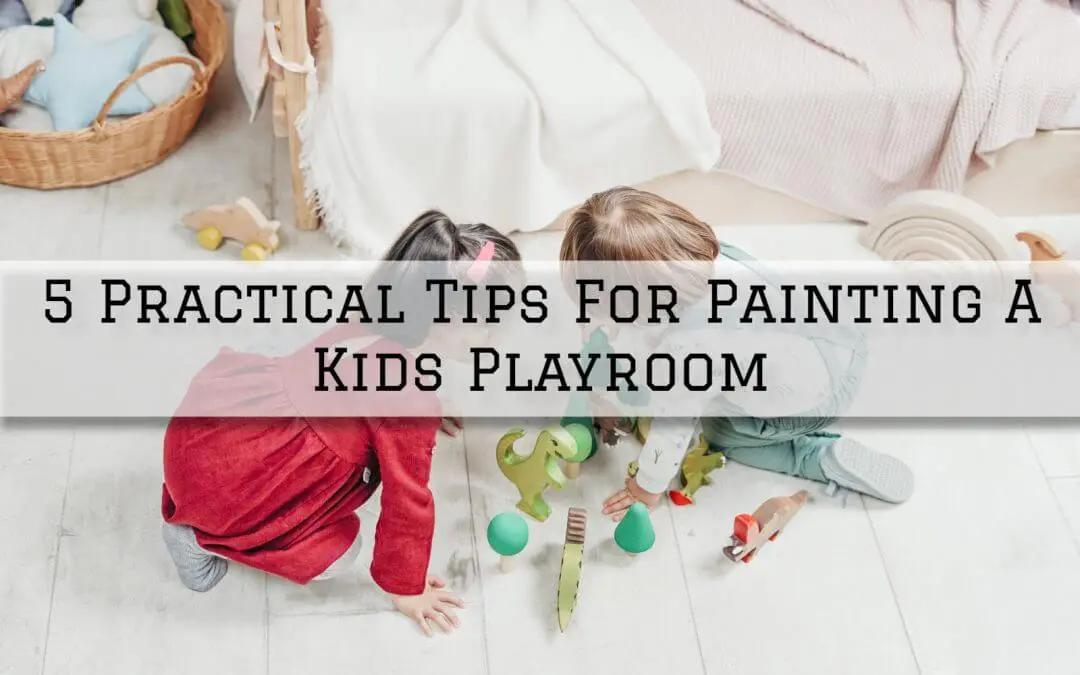
5 Practical Tips For Painting A Kids Playroom in Denver Metro, CO
For families with kids that have some extra space to spare, playrooms will be a worthwhile investment.
A playroom is generally a room or area where most families keep their toys and other games in.
To kids, this is where they want to spend most of their time when they’re bored or when they can’t go out to play.
Playrooms can keep your children occupied, especially in areas where there are typically no children’s parks or playgrounds.
Parents can also rest easy knowing their kids can still get the playtime they need while mom and dad take a couple of hours to relax.
How the playroom looks will significantly encourage your kids’ creativity and imagination, so it’s crucial to design it in a fun and suitable way for children.
With that said, here are 5 Practical Tips Painting A Kids Playroom in Denver Metro, CO:
1. Choose Safer Paints
It’s important to note that though paints generally have a low chance of causing health-related issues, they release low levels of toxic emissions called volatile organic compounds or VOC that could be harmful to young children.
Go for specific brands that offer low-VOC or zero-VOC paints to keep your playroom safe for your kids.
Consider using eco-friendly paints as well.
Playrooms intend to keep your kids happy, but it’s also vital to keep them healthy and safe while you’re at it.
2. Protect Your Walls
Children, especially in their earlier years, will have an innate curiosity and drive to explore new things.
They also have little to no perception of how chaotic they can get as well.
Coloring material of choice in hand, they’ll want to scribble anywhere and everywhere – including your walls.
For your sanity and your kids’ convenience, it’s better to go for paint finishes that are durable and wipeable such as flat, satin, or even eggshell, for worry-free art time.
3. Turn Your Walls Into A Free Drawing Space
What if you want your kids to explore their artsy side – even if it means you have to watch them draw on the walls?
Not to worry, since there are paints out in the market specifically made just for that purpose.
Good thing there are brilliant minds at some paint brand companies – who must have their hands full with creative young ones too – that have thought of turning paint into a fun activity for kids.
You can purchase chalkboard paint or whiteboard paint to make your walls fun yet functional!
4. Add A Mural
If you want to cover more expansive walls and set a positive and playful environment for your kids, Murals are a great choice.
Murals are pieces of art that are generally painted on walls – and that includes your playroom’s walls!
If you have a budding artist at your hands, adding a mural can help stimulate their artistic senses and inspire them to create more art.
For parents, adding a mural can be a quick and easy way to hide any stains or permanent drawings from view.
5. Incorporate A Theme
Still can’t decide on how to paint your playrooms? Go with a theme instead!
Embracing a specific theme for your playroom saves a lot of planning on what to paint your walls as you can get a clear image of what you and your kids want.
It’s a fun way to let your kids inject their personalities into a room specifically made for their enjoyment.
Not only is it easier and quicker to find items and furniture that you could incorporate into your playroom, but you could also change it up as your kid’s age.
Don’t settle for just any painter when you can get the attention to detail and professionalism from Imhoff Fine Residential Painting in Denver Metro, CO. Call us today to speak with one of our professional color consultants.
7 Playroom Painting Tips To Follow in Denver Metro, CO
A playroom is one of the most treasured places where a child is going to be able to spend time when they are at home – there are so many pleasant things for them to do and learn.
In looking to update your child’s playroom, one thing you could do is to make the time to paint the walls of the playroom — and having well painted walls will be just what you need to make the difference between an okay playroom and one in which your child or children will be that much happier to use.
Let’s now look at and consider seven playroom painting tips to follow in Denver Metro, CO
1. Clean The Walls
One thing you should know about painting your playroom is that you’re going to have to clean the walls thoroughly before you start the process of actually applying primer and then paint to the walls.
One might think that just the nature of painting the walls would be enough to get the look of the walls to be that much improved even if one would not clean said walls, but this is not at all the case.
Instead what you’d end up having is a set of walls that look exactly like what you’d think it looks like to paint over dirt — and that is not a look you would want to have in any playroom.
2. Use The Right Kind Of Paint
In painting a child’s playroom, you aren’t going to just want to be using any sort of paint — there are going to be children playing there after all and so you want to take care of them in every way you can.
That means if possible you want to go for paint that has no unpleasant emissions – but at the same time, you should try for a paint that is high in gloss so that it’s easier to clean.
3. Carefully Consider Your Color Choices
You’re painting with an audience of children, so you have to bear that in mind when you are considering the color or colors that you’re going to make use of on your walls.
This means that you shouldn’t use over the top colors that would be bothersome but more simple colors that your child can appreciate.
4. Sand Before You Start
If you want well painted walls in your kid’s playroom, you need to start with smooth surfaces and one good way to ensure that your surfaces are smooth with a bit of sanding.
The key is to not oversand – and just to gently sand the surface so that you will have smooth surfaces upon which to apply your primer and paint.
Some say that you can additionally sand in between coats of primer and paint (not the last coat of course) and if you wish to do so you may find that it helps.
5. Clean Sanding Dust
All of the sandings in the world is going to do you exactly no good if you don’t clean the sanding dust that comes about from the sanding process.
Specifically, you need to remove all of the sanding dust — it’s quite fine but if you don’t remove it, you’ll eventually see it in the paint on your walls and that’s quite unpleasant.
6. Don’t Use Cheap Rollers
If you want to save money on your paintwork that is good and fine but you aren’t going to do a good painting job if you make use of cheap paint rollers.
This is because some of the worst things can happen when you use overly inexpensive rollers — they can make painting so much more difficult and can even get bits of the roller cover onto the paint that you are applying.
7. Getting Creative Is Encouraged
Lastly, remember that you’re painting a playroom — creativity is absolutely encouraged and in most cases will make for a more fun playroom.
This is your kids’ playroom so if you want to put a giant dinosaur on the wall you should do that, and if you feel like a castle should cover the wall you should try to make that happen as well.
Don’t settle for just any painter when you can get the attention to detail and professionalism from Imhoff Fine Residential Painting in Denver Metro, CO. Call us today to speak with one of our professional color consultants.
5 Dining Room Tricks For A Less Messy Paint Job in Denver Metro, CO
In any painting job, there’s the possibility of making a bit of a mess — but this doesn’t necessarily have to be the case.
The issue with this is that the messier you are in painting your home, the more time that you are ultimately going to have to spend cleaning up after you have finished with your painting project.
There are things that you should know about that when you bear them in mind, can make for a less messy painting experience.
Let’s now look at and consider five dining room tricks for a less messy paint job in Denver Metro, CO
1. Stirring Your Paint
One important thing that you’re going to want to do in terms of keeping a mess-free paint job is to stir the paint and not as some would think to shake the can.
One might think that shaking a can of paint will get it well mixed, but this is not the case — instead, the at home method of shaking a can of paint will get your paint that has bubbles in it, and those bubbles will very much come across when you are painting the surfaces.
2. Making Sure To Stir In A Disposable Bag
In terms of stirring your paint, you may be well aware that there’s always a good possibility that there will be some paint that splashes out of the bucket.
If you first put the bucket of paint into a disposable bag before you start stirring it, you will be able to stir as vigorously as you’d like and you won’t have to worry about paint splashing as it will only go into the bag.
3. Painting Over Primer
A less well-known way to keep your dining room painting work less messy is to make sure that you first apply a coat of primer to the surface that is being painted before you apply a coat of paint.
The reason that this is the case is that just by having a coat of primer, you’re going to be able to apply the paint more easily, and on top of that the paint that gets applied will adhere to the surface more readily – one of the qualities of primer being that paint adheres to it better than it adheres to a bare surface.
4. Remove Furniture As Possible
There are few things that are going to get in the way of you properly doing an interior painting project quite like having things that get in the way, and what is more likely to get in your way of a painting project like the furniture in the room?
Moreover, the very presence of the furniture allows for the possibility that the furniture is going to get paint on it — even if you take every precaution to protect it first.
Where it’s possible, you’re going to want to remove as much of the furniture from the room as you can, and if you absolutely can’t remove a bit of furniture for whatever reason you should properly cover it in such a manner that it won’t be possible for the paint to get on it.
The last thing we will discuss for the purpose of this article is how you should think about the light fixtures in the dining room and what you’re going to be able to do to protect them during the painting process.
One way that you can easily make sure that they will be protected is to entirely remove them from the room — of course, this is not always so simple to do.
In this case, you may want to make the time to cover the fixtures with something — perhaps plastic sheeting – so that paint won’t’ get on them.
Don’t settle for just any painter when you can get the attention to detail and professionalism from Imhoff Fine Residential Painting in Denver Metro, CO. Call us today to speak with one of our professional color consultants.
7 Loft Painting Tricks To Remember in Denver Metro, CO
In making sure that your home looks as good and up to date as possible, you’re going to want to go through and keep an eye on how the paint looks in every room — including the somewhat more obscure rooms like the loft where you very well might not spend as much time.
If you take care while you are painting and bear certain tips and ideas in mind, you’re going to find that the painting of your loft will go better and in some ways more efficient than it was.
Let’s now look at and consider seven loft painting tricks to remember in Denver Metro, CO
1. Careful Bringing Things Up
When you’re looking to paint your loft, you should be aware that taking your painting equipment to the loft is not going to be like taking it to the other rooms of the house.
This is because of the way that most people have to access their loft area — specifically, you go through a smaller door after climbing up a set of ladders, and this is a bit more difficult than just walking through a standard door with your equipment.
With that in mind, you should be more careful with how you take things up.
2. Consider The Kind Of Paint Used
Though you are going to be painting your loft, you still have to be mindful of the kind of paint that you are going to use to be painting and not just use anything just because it happens to be on sale.
Ideally, you’re going to want to use a paint meant for interior painting as this will make more sense, and after that perhaps consider a glossier paint as that’s a bit easier to clean and with things that you may be stored in a loft that could be a good thing.
3. Protect The Floor While You Paint
If there’s one thing that can be said for painting a loft, it’s that it’s going to see quite a bit of paint and the like during the painting process, perhaps because of how the dimensions of the room can play out.
The best thing that you can do in this case is to make sure that you use something to protect the floor so that should something drip down, you won’t have to worry about cleaning it up as much — such as. a drop cloth that will not let the paint go through.
4. Clean Well Before Painting
Speaking of dust, you’re going to want to clean the loft area well before you paint the walls as you will see quite a lot of dust and the like and the last thing you want is that dust on the walls.
By taking the time to clean you will improve the quality of your painting substantially.
5. Use Primer Before You Apply Paint
Though it’s impossible to have a perfectly smooth surface upon which to paint, you can certainly help the cause by applying a coat of primer to the surface that’s being painted.
Simply make sure to get enough primer to apply to the loft walls and after preparing the walls, apply a coat — and then allow them to dry (more on this later.)
6. Ventilate Carefully
Since you’re going to be in a loft space, you have to be especially careful while painting to have enough ventilation.
You should open up any door or window that you can to get some airflow going on.
7. Allow Your Surfaces To Dry
Lastly, you should remember that any surface that gets wet whether it’s from cleaning them or applying a coat of primer or paint needs to be allowed to fully dry before you move on to the next step.
If you fail to allow the surfaces to dry you will have painting issues later — allow surfaces to dry!
Don’t settle for just any painter when you can get the attention to detail and professionalism from Imhoff Fine Residential Painting in Denver Metro, CO. Call us today to speak with one of our professional color consultants.