5 Mistakes To Avoid When Painting Your Bathroom Cabinets in Denver Metro, CO
In the course of improving the look of your home, one of the things that you could consider doing is to update the look of your bathroom — in some cases, it may have been a while since it was last updated.
Since you’re going to be updating the said bathroom, you might look at the cabinets and think that you should replace them — but it’s quite possible you will decide that painting them will be better in terms of cost and environmental impact.
It’s important to be on the lookout for the kinds of mistakes that might possibly derail your painting project, however — for when you have such errors, it’s possible that you will lose out on a fully realized painting project.
Let’s look at and consider five mistakes to avoid when painting your bathroom cabinets in Denver Metro, CO
1. Not Cleaning The Cabinets First
The first thing that you need to know is that when you are looking to paint is that you have to have properly cleaned the cabinets that you’re looking to clean before you start.
The reason that this is such an important thing to do is that when you’re painting, you need to have a surface that will be receptive as it were to paint — for despite some people thinking that it’s possible to just paint over a dirty surface, this is absolutely not the case.
It’s important to remove the dust and grime that may have built up over time on the surface of your bathroom cabinets before you start painting.
2. Using The Wrong Kind Of Paint
There are of course many kinds of paint that you can use when you’re painting the interior of your home and though it may seem straightforward when you’re painting your bathroom cabinets, it most certainly is not.
In the case of painting your bathroom cabinets, you should realize that it’s important to use a paint that will be resistant to mold and mildew, as the typical bathroom has more humidity in it at times during the day and so will have the possibility of introducing mold and mildew.
That is why it’s so important to have the right kind of paint — to keep the mold and mildew at bay.
3. Not Applying Primer First
It’s important to apply a coat of primer before you paint your bathroom cabinets, as the primer has two functions in your typical interior paint job.
First is to ensure that the surface of your cabinets is as smooth as possible.
Secondly, the presence of primer on your bathroom cabinets will allow the paint to properly adhere.
4. Not Properly Ventilating While Painting
In terms of keeping your bathroom properly ventilated during the painting process, it cannot be understated — you have to have a well ventilated space while you are painting your bathroom.
To not do so is quite a bit of a health risk — for even the kinds of paints that claim that they have low emissions still have some — and you should be mindful of having proper ventilation to prevent this.
5. Not Allowing The Paint To Dry First
Lastly, one of the biggest mistakes that a person might make during the painting process is to not allow the first coat of paint to dry prior to applying the second coat of paint.
The issues that can come about when you don’t let the first coat of paint to dry before applying the second coat are a few, but one of the most significant ones is that the first coat will actually start to come off as you are trying to apply the second coat.
It’s far better to make the time to allow the first coat to dry and only then to apply the second coat.
Don’t settle for just any painter when you can get the attention to detail and professionalism from Imhoff Fine Residential Painting in Denver Metro, CO. Call us today to speak with one of our professional color consultants.
5 Ways To Match Exterior Colors When Painting in Denver Metro, CO
When you want to paint the exterior of your home and you’d like to have the color match the one that was previously there, you of course would have no to few issues if you keep the information about the paint.
Such information would include what kind of paint was used (in terms of manufacturer and qualities related to it) as well as the precise color tint — these are sometimes represented not just by a name but a manufacturer code that is specific to them.
If, however, you do not have this information, your task will be a bit more difficult — but not impossible if you follow a few basic guidelines, some of which will more approximately match the original color of your house.
Let’s now look at and consider five ways to match exterior colors when painting in Denver Metro, CO
1. Approximating By Appearance
The first and generally least accurate way to match the exterior color on your house with what was previously used is to approximate it based on the appearance of the color in the paint store.
When you go to the paint store, you can look through the various paint colors on swatches and see which one looks to you the same as the color or colors you remember being on the exterior of your home.
This is the least accurate because our memories are only so accurate, and so the best you can
2. Bringing In A Photograph
The next thing that you will be able to do to match the exterior color from your house is to bring a photograph of the house as it was when it was first painted, if possible, to the paint store.
Here the upside is that if your photograph was taken in the right light, you should be able to get an approximate match for the exterior color — but of course, that is a big if and it also depends on the photograph being taken at the right time.
The worst case scenario is that the photo was not taken in the right light and you end up with an exterior color that resembles the former color but is not precisely the same.
3. Using An App
There are apps that you can get for your smartphone that can have a look at a paint color and then tell you what kind of paint it is.
The downside to some of the apps out there is that they may be sponsored by certain paint companies and so they may suggest paints that they make regardless of how close of a match the color is — but that’s how they can justify making such apps (in that they will guide you to buying their paints)
4. Contact The Previous Homeowners
A seemingly simple yet not always manageable way to get information about the color that was previously used on the exterior of your home is to try to make contact with the previous homeowners and to ask them, and hope for the best.
It’s entirely possible that they had some kind of written record of the paint information that they’re going to be able to pass on to you — but this entirely relies on being both able to get in contact with them and also them having the information.
5. Get A Sample Analyzed
The last method is the most likely to get you a color match that is going to best represent what you had as far as exterior paint color goes.
What you do is to take a scraping of the actual paint on the exterior of your home and take it to a paint store that has the right kind of machinery for analyzing paint samples and they will be able to tell you with high precision the kind of paint that was used in painting the exterior of your home.
Don’t settle for just any painter when you can get the attention to detail and professionalism from Imhoff Fine Residential Painting in Denver Metro, CO. Call us today to speak with one of our professional color consultants.
7 Signs Your Kitchen Needs To Be Repainted in Denver Metro, CO
When you have a home and are looking for ways to improve it, you may possibly think about the kitchen and how it occasionally needs to be painted — but are you sure that the time has come to paint it, or is it perhaps premature?
Indeed, it’s a good idea to know or at least have a sense that it’s the right time to paint your kitchen — there are certain key signs that will let you know that the kitchen is ready to be painted.
Let’s look at seven signs your kitchen needs to be repainted in Denver Metro, CO
1. Cleaning Would Take More Time And Effort
One sign that you are going to want to paint your kitchen is if you look at the state of the condition and see that it needs to be cleaned so much that it would actually be easier to paint than fully clean.
Of course, you should be aware that cleaning is also going to take part in the painting process but it won’t be quite the same as if you are cleaning just for the sake of making your kitchen look like new once again.
2. You Want A Change In Style
Another reason that you might want to paint your kitchen is that you look around and aren’t thrilled with the style that you have going on anymore.
Of course, there are many styles you can choose for your kitchen, but only some of them are going to speak to you as it were.
Make the time to look for a color or colors that are going to work well with your kitchen and then paint it and see how nice your kitchen will look.
3. There Are Many Areas That Need Touch Up
If you find that there are many areas of your kitchen that need a bit of a touch up — the kind of thing that could happen if there are dents or other sorts of damage to your kitchen walls — it’s possible that a full paint job is in order to make the whole thing more cohesive.
This is because once you have a certain number of touch-ups to do, it is a bit more noticeable that you have done all of the touch-ups and it will be that much more important that you pay all of the walls.
4. You Are Looking To Sell Your Home
If you are looking to sell your home, one thing that’s going to help you is to have a newly painted kitchen.
The benefit of having a newly painted kitchen is that you can choose a color for the kitchen that is going to make the house that much more likely to sell.
5. It Has Been Too Long Since You Painted
Another good reason that you’re going to want to paint your kitchen is if it has been a long time since the last time it was painted.
Though some might think that a good paint job in your kitchen is just going to be there forevermore, this is not the case — and if it has been more than seven or so years since it was last painted (depending on what kind of paint you use and the techniques you use) you should consider repainting.
6. You Want To Upgrade The Protection
If you happen to know that the last time the kitchen was painted, the kind of paint used was not ideal for a kitchen (not easy to clean, for example) it may be a good idea to repaint using a more kitchen friendly paint.
7. You Want To Improve The Value Of Your Home
Lastly, you might want to consider painting your kitchen if you want to improve the value of your home.
Depending on how long it has been since your kitchen was painted, it would be good to paint your kitchen.
Don’t settle for just any painter when you can get the attention to detail and professionalism from Imhoff Fine Residential Painting in Denver Metro, CO. Call us today to speak with one of our professional color consultants.
The gutter on your home is one of the important things that you need to have in good shape in order to have a healthy house — and yet some people neglect their gutters until they are hanging off the side of the house and are nearly ready to flood the area near your house, if not your house itself.
Of course, if you know what you are doing when you are performing this kind of maintenance it will go much better — and the best way to start is to have a base of knowledge.
Let’s take a look at seven gutter maintenance tips in Denver Metro, CO.
1. Gutter Guards Are A Good Thing
The first thing you’re going to want to know when it comes to maintaining your gutters is to make the time to consider the possibility of adding gutter guards if you don’t already have them on your gutters.
The benefit of adding such guards is that you will ensure that it’s a lot more difficult for things to get actually into your gutters, which is the root of a lot of your gutter problems.
By not allowing the larger things to get into the gutter but still allowing in water, you will help extend the life of your gutters.
2. Fix Your Downspouts
Your downspouts are what allows the water to get out of your gutters and flowing in the appropriate place.
The problem is that often enough, the downspouts are going to be the problem area because that is where so much water and the material will come out.
Consequently, it behooves you to make sure that the downspout is in good shape on a somewhat regular basis so you don’t end up with a flood or possibly worse.
3. Check Your Gutters After A Strong Rain
Of course, you might know that you should check your gutters on a semiannual basis, but there are times that you should check your gutter even though it’s not the time of the year for you to do so.
After a strong rain has fallen, for example, you might want to make the time to have a look at your gutters to make sure that they’re still in good shape.
4. Clean Your Gutters Regularly
Part of the maintenance of your gutters is to clean them regularly.
The reason that this is the case is that just by allowing your gutters to get full of things and then not actually removing them — they could be things like leaves and the like — there’s a good chance that water will get backed up and cause damage to the structure.
5. Get Your Leaky Areas Sealed
If you look at your gutters and you sense some kind of a leak by means of seeing water coming out of the gutter in a certain part, you should carve out some time to make sure that they get sealed.
This could entail a number of things but usually, it is taking some kind of sealant and applying it to the area of the gutter that is leaking so that it stops doing so.
6. Verify Your Gutters Are Secure
As bad as a leaky gutter is, it’s not nearly as bad as gutters that literally are falling off the side of your home.
The way that you can do this is to check that the things attaching your gutters to your home are still intact and that they are all there — if they get too loose they can actually entirely become detached from the house, which is a sign of danger.
7. Check For Branches
Lastly, you should also make sure that you check for branches that may be near your gutters — they may appear to be harmless but they could do some harm to your home.
It’s best to trim the trees that are near your tree to ensure that no such damage occurs.
Don’t settle for just any painter when you can get the attention to detail and professionalism from Imhoff Fine Residential Painting in Denver Metro, CO. Call us today to speak with one of our professional color consultants.
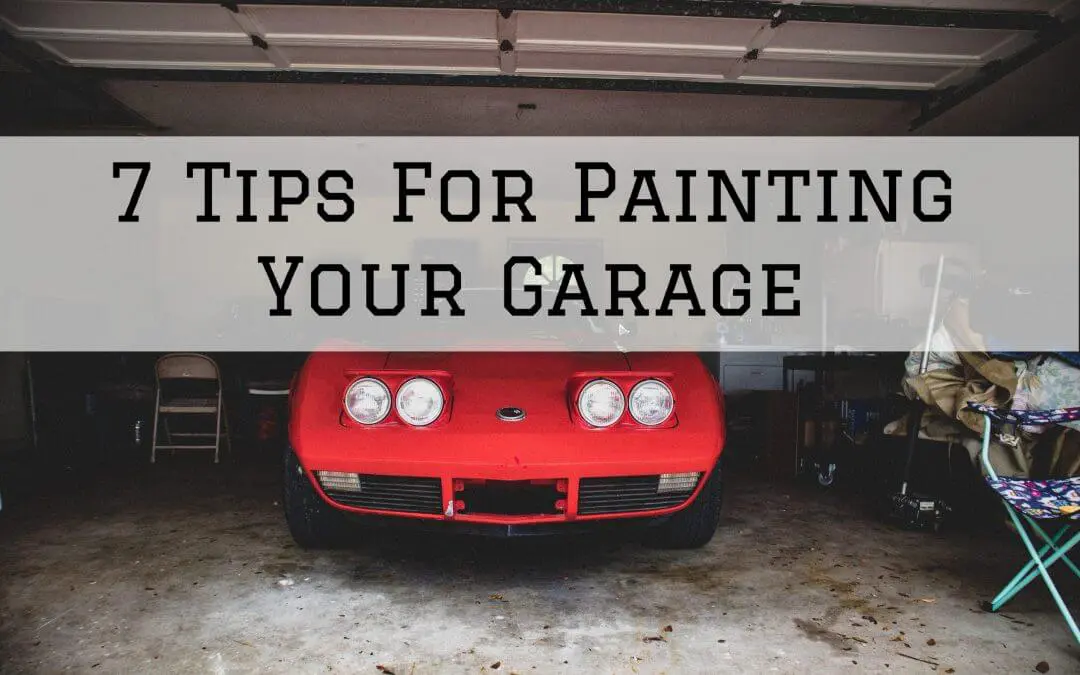
7 Tips For Painting Your Garage in Denver Metro, CO
In the updating of your garage, though you may want to look at storage or the way that your garage is ventilated (or perhaps even the garage doors), it’s entirely possible that a new paint job will make your garage look significantly nicer.
Naturally, painting your garage may make you a bit apprehensive for it’s not entirely like painting your home interior, being the garage — and yet it’s certainly not your exterior, either.
Let’s take the time to consider seven tips for painting your garage in Denver Metro, CO.
1. Consider The Material You Are Painting
When you’re looking at painting your garage, you have to take the time to think about the kind of material that makes up your garage walls and then consider if the kind of paint that you are going to use is appropriate for that material.
If your walls are made of stone, for example, it’s entirely possible that you might have the wrong kind of paint if you had paint that was more meant to paint a different sort of material.
Though it would be nice if just about any kind of paint would work for any paintwork, the truth is that certain kinds of paint are more appropriate for some materials than others.
2. Look Out For Mold
In painting your garage, one of the most fearsome things with which you are going to contend is that of mold and mildew.
The best thing to do is to regularly inspect your walls for any sign of mold and mildew and to take care of it then, but certainly when you are going to paint.
Even though it might seem like a couple of coats of paint are going to take care of the mold on their own, all it will do is cover it up and the mold will rear its rather unpleasant head eventually — and ruin your perfectly good paintwork.
3. Clean The Walls Being Painted
Speaking of cleaning, you have to start a good garage painting job by ensuring that the walls that are going to be painted are clean.
As mentioned above, you can’t paint over things and just presume that everything is going to be okay — in the case of a dirty garage surface, all you’ll be doing is making it clear that you have painted over dirt and grime.
Make sure that you fully clean the walls and then allow them to dry before painting.
4. Use Primer First
As good as it is to paint your garage walls, it’s only going to be as good as the walls are smooth — and if you want to have exceptionally smooth walls, add a coat of primer before you apply the first coat of paint.
This is good for a number of reasons but remember that primer is quite adhesive and so you’ll get your paint to stay on the garage walls much better just for having the primer there.
5. Invest In Good Paint Brushes
Though you might believe that you have good ways to cut the cost of your garage painting project, you should certainly not try to do so by using inexpensive paintbrushes.
Lower quality paintbrushes tend to fall to pieces as they are used normally, and you might even get bristles in the paint itself.
6. Remember To Keep Ventilation
As you are going to be in the garage, it’s a really good idea to ensure that the area that you are painting is well ventilated.
This means of course that you may have to have the garage doors open — and possibly the door or doors leading to the garage, so that you get good airflow.
7. Don’t Rush The Painting
Lastly, do yourself the biggest favor and don’t rush the process of painting your garage.
Though it can take a long time to paint your garage, rushing it will not make it better — it will just end with you making fundamental painting mistakes that you then have to go back to and correct.
Don’t settle for just any painter when you can get the attention to detail and professionalism from Imhoff Fine Residential Painting in Denver Metro, CO. Call us today to speak with one of our professional color consultants.