20 Years of Imhoff Painting in Denver | Our Family Story
Somehow, while we were busy living, twenty years went by.
I meant to write this last year, and I started it too, really.
The story of why it’s taken so long to complete is fodder for yet another newsletter, at another time. That’s one of my superpowers. The magic words another time are spoken and—voilà!—the situation vanishes in a poof and takes up residence in my cartoon bubble, where it follows me around, quietly at first, later not so much.
And, in truth, this story doesn’t begin twenty years ago. It begins earlier.
BEFORE DENVER
Sometime in the early 1990s, Mom and Dad started Imhoff Painting Company in the suburbs of the Twin Cities, Minnesota.
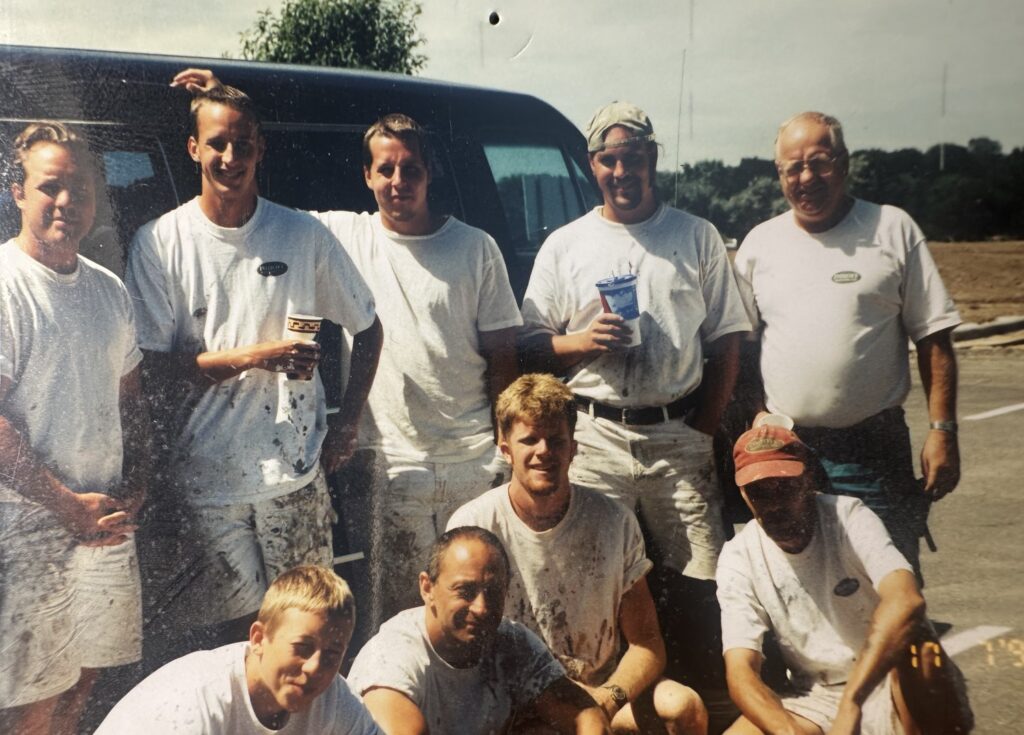
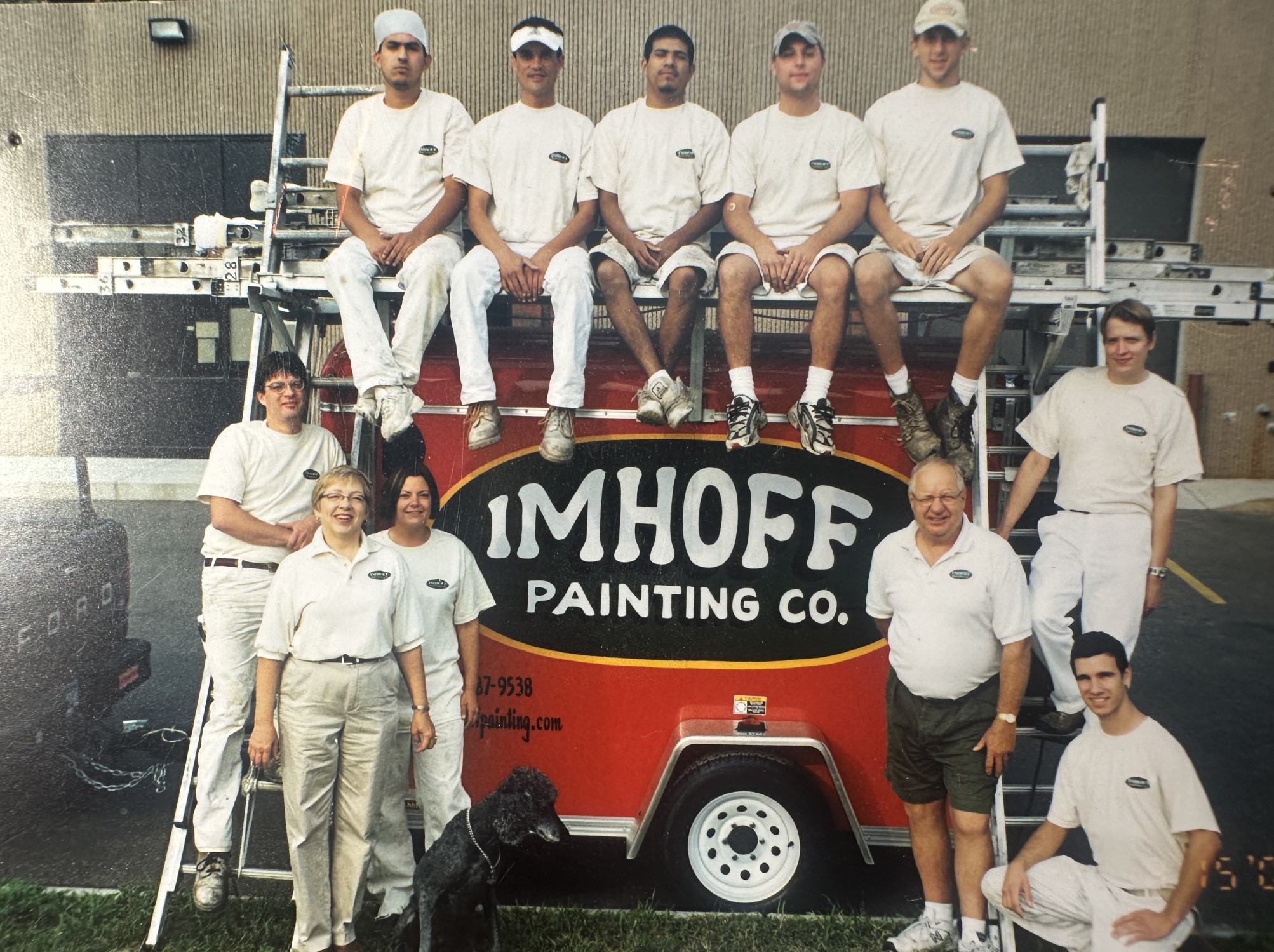
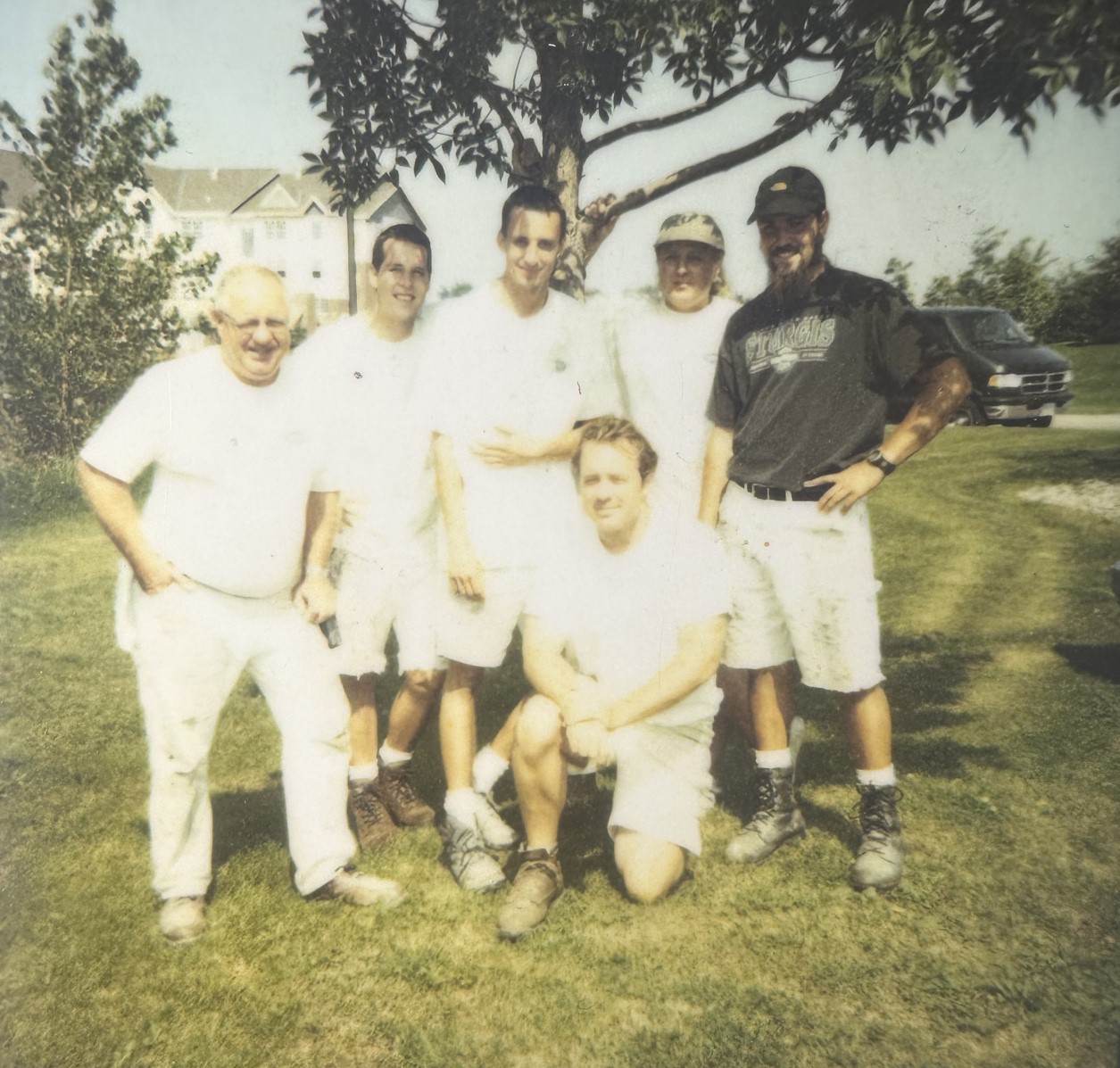
That’s the original company in these old photographs. Dad is in all of them. Mom is in one, too. There are painters in white shirts and white pants, ladders everywhere, and a red Imhoff Painting trailer—hand-lettered by Dad and me! We had a bunch of trailers. We were going gangbusters!
Back up: We were living in Colorado when he called me one February and asked what I was up to. Dad told me he’d started a painting company and was super busy, then asked if Khanh & I wanted to move to Minnesota and join the company.
At the time, I was still finalizing my plans to take over the world, so I wasn’t really that busy.
Khanh had no idea what living in Minnesota was going to be like, but she was down for a new adventure. We talked about it and decided to give it a go.
I wasn’t thinking about words like legacy or stewardship. I was a young man with a family. I was going to learn a trade and make a living while deciding what to do with my life.
Dad taught me the craft. He was as old school as it gets, and he had a systematized process for everything we did—it was not scattershot.
I learned from the bottom up. Not just how to put paint on something, but how the work gets done. Why the tool cart was set up the way it was. Why the trailer was organized just so. How to measure. What to look for. What questions to ask.
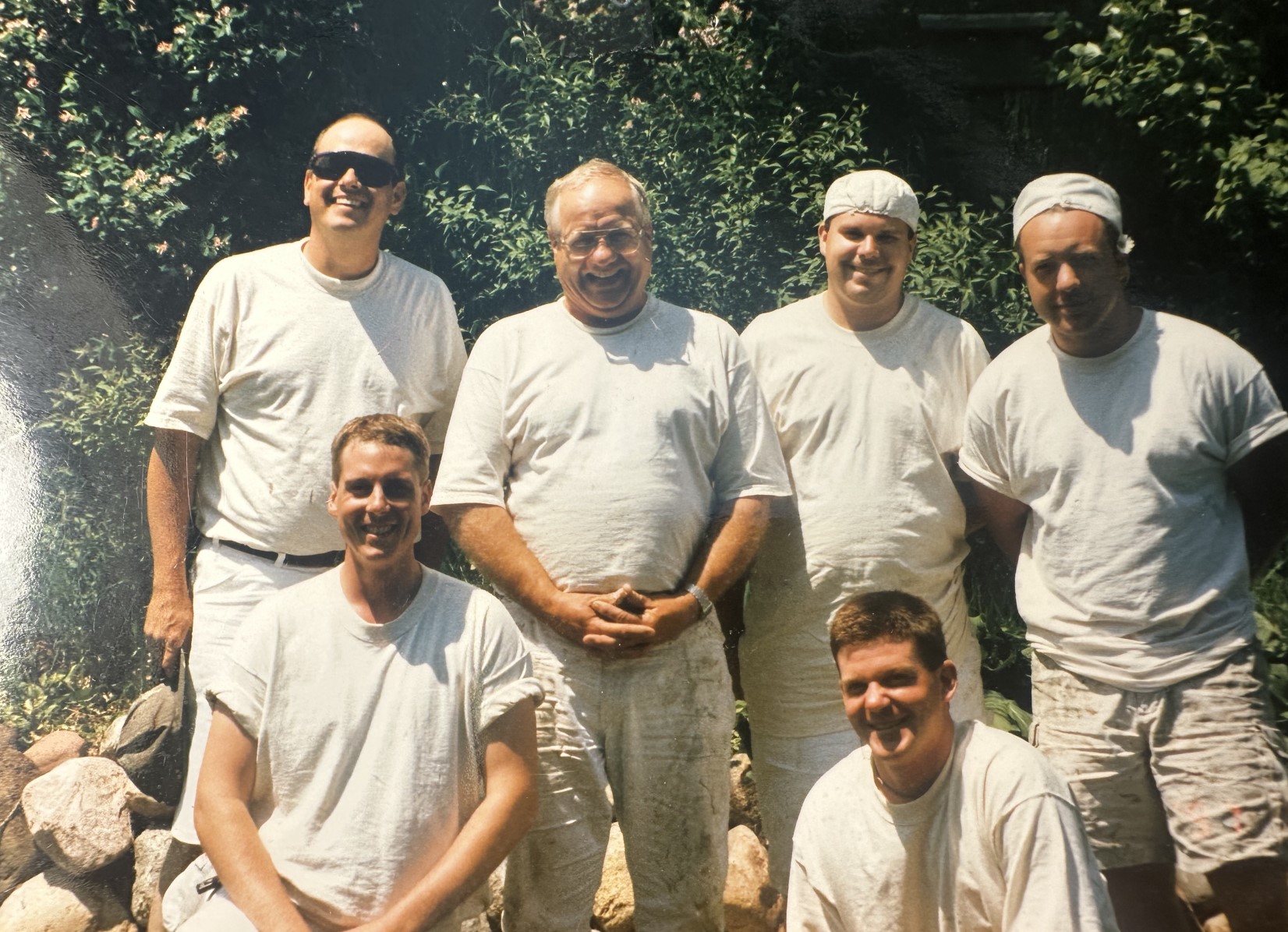
Preparation. Production. Problem solving. Working with other trades. Dealing with customers. Fixing things when they don’t go according to plan.
Especially that last one.
I spent the next ten years working in the business with Dad & Mom in Minnesota.
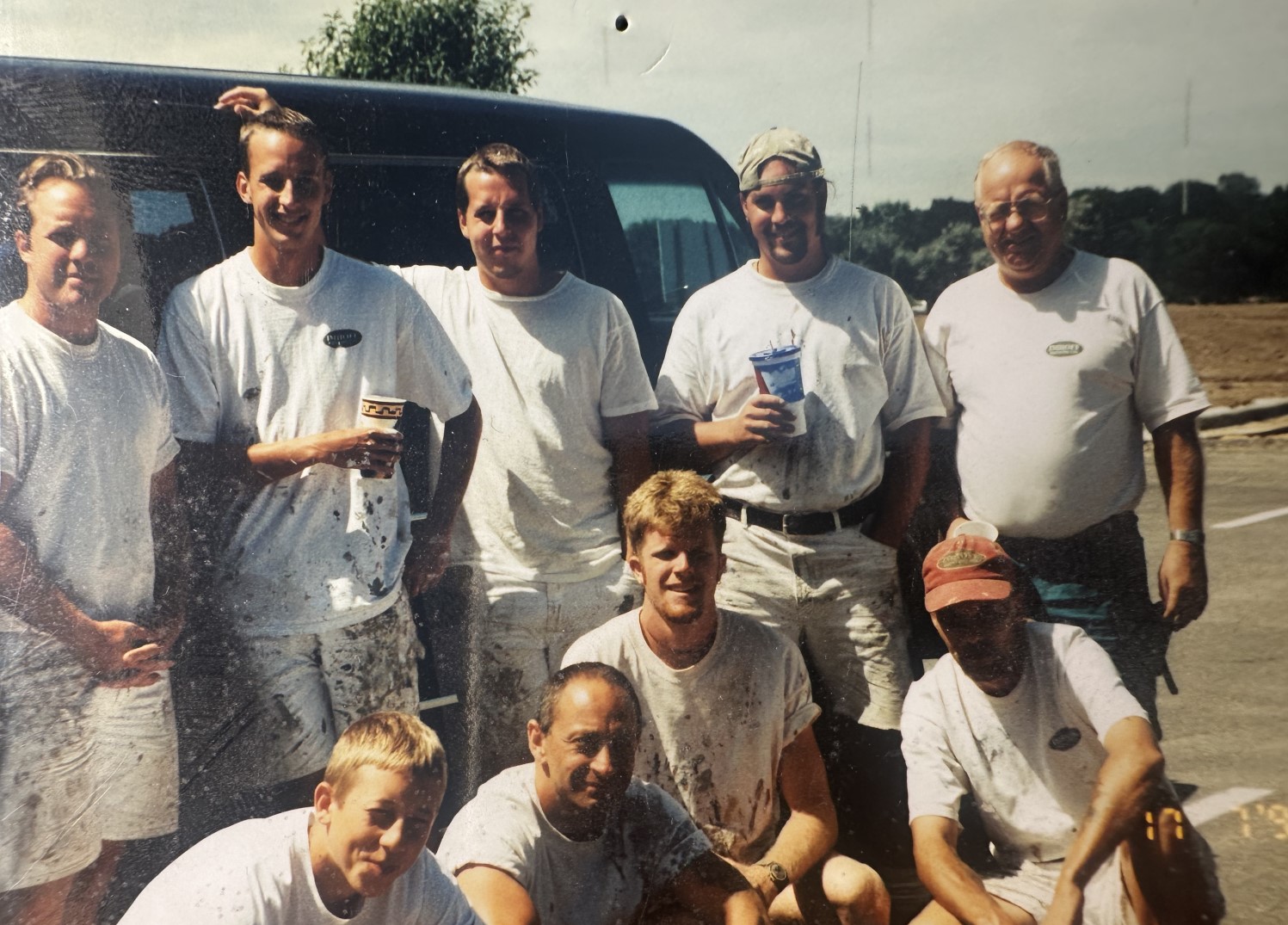
Almost from the time we arrived, Khanh had been yearning to go back to Colorado so the kids could get to know their other cousins. So, in 2005, we packed up our family and moved back home to Colorado.
And that’s where our twenty-year story really begins.
2005
The kids were young—elementary & middle school. We had just bought the house.
We were becoming reacquainted with our familiar old city—rekindling old relationships, weaving back into Khanh’s side of the family, figuring out schools, fixing up the house, raising kids…
…and at exactly the same time, starting a painting company.
Naturally, we called it Imhoff Painting Company.
At the time, it seemed like a fitting tribute, especially to the man who taught me the craft.
Twenty years later, I see it a little differently.
I thought I was borrowing the family name.
I was actually carrying something forward.
When I think back on those first few years, one phrase comes to mind:
The Blur.
I was in blur mode. Life was a blur.
Everything seemed to be happening at once, because it was!
It was exciting. It was exhausting. There was no time to analyze or understand. Nothing needed to be understood—it just needed to be done.
We were still old school then.
There was a family to support, kids to raise, ski days, a mortgage to pay, a house to remodel, customers to take care of, estimates to write and houses to paint.
So that’s what we did.
2005 LOOKED A LITTLE DIFFERENT
There were no iPhones in our pockets. We had flip phones that worked really well for talking to other people—imagine that!
Today, I think I use my phone to actually talk to people about 10% of the time. The rest is…well, you know what the rest is.
Blockbuster was still on the every-Thursday rotation. Netflix was sending movies through the mail.
Comparatively, it was a very analog time to be alive. Not as analog as the ’80s or ’90s, but compared with today, much more so.
Every decade feels a little less tactile than the last.
And if someone wanted to find a good painter, there was a pretty good chance they asked a neighbor—or opened the Yellow Pages and started dialing.
Our business grew the old-fashioned way:
One project, one recommendation and one relationship at a time.
We joined trade associations, designer groups and whatever else we could find to drive awareness.
We grew.
There were obligatory long days, late estimates, changing schedules and more than a few occasions when the carefully constructed plan for the day was obsolete by 8:15 in the morning.
Anyone who has owned a small business knows the feeling.
You adapt, solve the problem in front of you, and the next morning, you do it again.
Some jobs went beautifully. It’s funny how those jobs fade in the memory.
Others taught us things we probably couldn’t have learned any other way.
Those are the jobs whose lessons linger—the ones that reach through time, tap me on the shoulder and ask:
Do you remember that time…?
WINS, LOSSES, AND DRAWS
There have been plenty of all three.
Twenty years of running a business doesn’t arrange itself neatly into successes and failures.
Some of our biggest wins started out looking like disasters. Some jobs we desperately wanted turned out to be jobs we were fortunate not to get.
Some mistakes were expensive.
Any mistake that fails to instruct gets repeated until it does. Those are called lessons.
And lessons can be even more expensive.
Every once in a while, everything went exactly according to plan—which generally made me suspicious that we’d forgotten something.
There were boom years. There were lean years. There was a housing crash. There was a pandemic.
Good people came into our lives through the company. Some stayed for years and helped shape what Imhoff became. Others continued down different roads.
Clients moved. Families changed. Our children grew up. Our clients’ children grew up.
People came into our lives. People left.
And inevitably, after this many years, there are people who aren’t here anymore.
That’s part of twenty years, too.
Along the way, Khanh and I grew older as well.
That’s the funny thing about twenty years. You don’t really notice it happening. It’s a series of seemingly inconsequential moments when something causes you to think—and sometimes say to each other—How did this happen so fast?
It really does sneak up on us.
You’re too busy living Tuesday, and thinking about Saturday.
THE HOUSES CHANGED, TOO
One thing I’ve noticed is that we’ve returned to homes years after our original project and discovered entirely different versions of them.
The nursery became an office. The children’s bedrooms became guest rooms. The rec room became a hobby or craft room.
Golden Oak became white, then gray.
Wallpaper disappeared—and eventually, wallpaper came back.
We’ve watched kitchens get remodeled, additions built, furniture change and entire generations of decorating trends come and go.
Many times we’ve worked for a client in one house, then another, and occasionally another after that.
And somewhere along the way, I came to understand something about this business that I don’t think I understood when we started:
Homes change. Style changes. Clients themselves are the continuity.
The house was never really the relationship.
The people were.
Their work ranges from very good to amazing. They really care about and for their clients.
COMING FULL CIRCLE
There’s something else I’ve realized lately.
In a strange way, after twenty years in Denver—and really more than thirty years since I first joined Dad—I’ve come full circle.
As a younger man, I thought running a good business meant learning how to estimate accurately, schedule efficiently, hire good people, produce excellent work and make the numbers work.
And it does. Those things matter enormously.
But at 58, I find myself returning to something more fundamental:
Business husbandry.
It’s an old-fashioned phrase, and perhaps that’s why I like it.
It means tending something. Taking care of it. Cultivating it. Leaving it healthier than you found it.
As a younger man, I understood those ideas intellectually, like an abstraction. I’m not sure they were completely authentic yet.
And the truth is, they couldn’t be.
Something like that belongs in the realm of things that truly have to be lived before they’re really understood.
Today, those things are real.
Twenty years of owning this company has taught me that craftsmanship is only part of our responsibility.
We’re entrusted with people’s homes. We’re entrusted with our team members‘ livelihoods. We’re entrusted with our clients’ time, money and confidence.
And we’re entrusted with a reputation that takes decades to build and can never be taken for granted.
I understand that differently now than I did in 2005.
It’s not clarity as much as it is comprehension.
And certainly differently than I did when I joined Dad in 1995.
Maybe that’s another thing Dad was teaching me all those years ago that I wasn’t quite old enough to understand yet.
It amazes me how smart Mom & Dad got when I rolled into my late 20s.
WHAT ABOUT THE NEXT TWENTY?
I’ve never been particularly interested in simply making Imhoff Painting bigger.
I’m much more interested in making it better.
Better at our technical craft. Better at communicating. Better at taking care of the people who invite us into their homes. Better at developing craftspeople. Better at passing along what we’ve learned. Better at upholding the traditions of our craft.
And better at remembering that underneath the estimates, schedules, ladders, brushes and gallons of paint, this has always been a relationship business.
There are exciting things happening around here—some of them generational—and I’ll have plenty to share about those in future newsletters.
But for this one, I wanted to stop for a moment.
Because twenty years deserves some reflection.
To everyone who hired us once:
Thank you.
To everyone who hired us again:
Thank you even more.
To the designers, builders, tradespeople and craftspeople who have worked alongside us:
Thank you.
To all the people who have worn an Imhoff shirt and helped build this company:
Thank you.
And to the clients who have trusted us with one home, then another—and allowed us to become a small part of your family’s story:
We are deeply grateful. Your support has helped us grow into a sturdy business with good bones.
Twenty years ago, everything was new.
The house.
The business.
Our life back in Colorado.
Today, much has changed.
But thankfully, some things haven’t.
We still believe in doing careful work.
We still believe craftsmanship matters.
We still believe your word matters.
And we’re still grateful every time someone trusts us with their home.
Looking at those old photographs of Dad’s company now, I realize something else.
Imhoff Painting didn’t begin with us in Denver.
We were simply fortunate enough to write the next chapter.
Here’s to the one that comes next.
Doug Imhoff
Imhoff Fine Residential Painting
Planning a Painting Project?
Imhoff Fine Residential Painting brings careful preparation, skilled craftsmanship, and professional project management to homes throughout the Greater Denver area.